
Toothpaste

15 min read
June 28, 2026
Toothpaste
15 min read
June 28, 2026
In This Article

You find the perfect private label toothpaste manufacturer, the custom formula is exactly what your brand needs, and your branding is ready to print. Then you hit the MOQ wall.
For many brands, a high Minimum Order Quantity is one of the biggest barriers to launching an oral care line. It forces a tough financial choice. You either tie up tens of thousands of dollars in upfront inventory before you have sold a single tube, or you compromise on your product vision just to find a supplier with lower limits.
Balancing budget constraints against production realities is a stressful hurdle that can stall a launch before it even starts.
This guide breaks down exactly what the typical MOQ for private label toothpaste looks like, why manufacturers set these specific limits, and how to navigate these requirements so you can get your product to market without draining your cash flow.
The standard baseline for private label toothpaste sits at 10,000 tubes for a typical 75g to 100g size. This minimum applies across the board, whether you are launching a standard fluoride blend, a whitening formula, or a natural product line.
While 10,000 units can feel like a massive hurdle for an emerging brand, it represents the baseline operational floor for commercial oral care manufacturing. This number is tied directly to the baseline requirements for tube printing, filling line economics, and raw material sourcing which we will explain next.
Accepting this 10,000-tube reality early in your planning is essential. Trying to source a supplier willing to go significantly lower often leads to dead ends, inflated per-unit costs, or compromises on formula quality.
If you are at the stage of evaluating toothpaste manufacturing options for your first launch, working with a private label toothpaste manufacturer and planning your budget and inventory around this figure from the start is what keeps your project on a realistic footing.
We mentioned that the MOQ for toothpaste is typically 10,000 and you must be wondering why.
MOQ is the result of several production requirements that work together, and each one sets its own floor under the minimum viable order size.
Here is what is actually driving that number:
Toothpaste tubes are sourced from specialist packaging suppliers, and those suppliers carry their own minimum order quantities for components. A manufacturer cannot order 2,000 tubes from a supplier whose minimum is 10,000 units. The tube supply side of the project sets a hard floor that the overall production MOQ cannot fall below, regardless of how small a brand wants to start.
This is one of the most commonly overlooked factors in toothpaste MOQ planning. Buyers often assume MOQ is a factory decision alone, when in reality the packaging supply chain is setting a significant part of that constraint before the manufacturer has even been involved.
Tube decoration, whether that is flexographic printing, offset printing, or any other method, requires physical setup work before a single tube can be printed. Printing plates need to be made, color calibration needs to happen, and the decoration line needs to be configured for your specific artwork.
All of that setup carries a fixed cost that exists regardless of how many tubes go through after it. On a very small production run, those setup costs become disproportionately expensive on a per-unit basis and make the run economically unviable. Spreading that fixed setup cost across a meaningful production volume is part of what makes the MOQ number what it is.
Setting up a filling line for toothpaste production involves cleaning, preparation, and changeover work that happens before the first tube is filled and after the last one. That time is fixed regardless of batch size, which means a very short production run uses manufacturing time as inefficiently as possible.
At around 10,000 tubes, the setup time gets distributed across a volume that makes the run cost-effective for both sides. Below that, the economics of running the line simply do not work in a way that supports a viable production cost for the brand or a viable production schedule for the manufacturer.
Ingredients and certain packaging materials are purchased according to supplier minimums that manufacturers have to meet when placing orders. Some of those minimums exist because of how raw materials are measured, packaged, or transported by the supplier. Others reflect minimum purchase commitments tied to pricing tiers.
Either way, a production run that requires only a very small quantity of a given ingredient may still require the manufacturer to procure a much larger quantity to meet the supplier’s minimum. That procurement reality feeds directly into why very small production runs are not economically viable and contributes to the overall MOQ threshold.
Taken together, these four factors, tube supplier minimums, decoration setup, filling line economics, and raw material procurement, are what produce the typical around 10,000 tube starting point.
It is not one constraint but several working simultaneously, and the MOQ reflects all of them at once.
For a closer look at how these factors come together in a real toothpaste production project, the private label toothpaste manufacturer evaluation guide covers the full qualification and production planning process in detail.
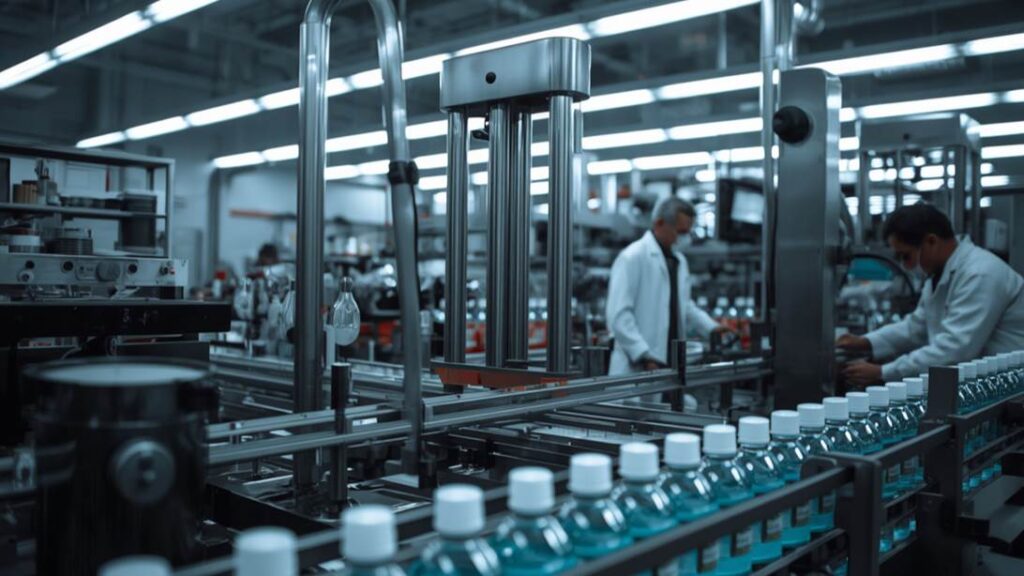
Standard private label toothpaste projects with stock formulas and established tube formats sit at the typical MOQ floor. When a project introduces customization, additional variables come into the picture that can influence where the MOQ lands.
Here is what tends to move the number:
The key point is that customization does not automatically push MOQ dramatically higher, but it does introduce variables that need to be worked through project by project.
MOQ and unit cost are directly connected through how fixed production costs get distributed across output volume, and understanding that relationship is important for building a launch budget that actually holds up.
Every production run carries fixed costs that exist regardless of how many units are produced. Line setup, decoration preparation, quality control procedures, and batch testing all happen whether you are producing 5,000 tubes or 50,000.
When those costs are spread across a larger production volume, the amount each unit carries is smaller and the per-unit cost comes down. When the same costs are spread across a smaller volume, each unit carries more of the overhead and the per-unit cost goes up.
Packaging procurement follows the same pattern. Tube suppliers often offer better pricing at higher order volumes, and those savings flow through into the unit economics of the production run.
The indicative FOB pricing for private label toothpaste at standard production volumes runs around USD 0.85 to 1.80 per unit, which reflects the economics of a run at or above the typical MOQ floor.
The practical implication for launch planning is that aiming for the lowest possible MOQ is not always the most financially sensible approach. A slightly higher order volume can meaningfully reduce your per-unit cost, improve your margin per sale, and give you enough stock to handle early demand without going back into production sooner than planned.
Planning your first toothpaste production run well means going in with a realistic picture of what the standard production floor looks like and building your inventory, budget, and timeline around that.
Here is what to work through before your first order is placed:
The full detail on how each stage of the launch process connects is covered in the private label toothpaste launch guide, which walks through formula selection, packaging decisions, and compliance requirements in sequence. Before confirming your first order, working with an experienced oral care oem manufacturer can help you review MOQ limits, packaging readiness, production timelines, and cost assumptions before cash is committed to inventory.
This South Africa dental toothpaste OEM case study also shows how these planning decisions played out on a real project and what getting the sequence right meant for the final outcome.
Specialized toothpaste categories come with their own formulation and ingredient profiles, and those differences can introduce additional manufacturing considerations that are worth factoring into your MOQ planning.
The most commonly requested specialist categories include nano-hydroxyapatite toothpaste, whitening toothpaste, kids toothpaste, and fluoride-free toothpaste. Each of these has formulation characteristics that differ from a standard fluoride product, and in some cases those differences affect ingredient sourcing, testing requirements, or packaging compatibility.
That said, the right way to approach MOQ in any of these categories is to evaluate it within the context of your full project specification rather than assuming a particular category automatically changes the number.
Specialty ingredients, custom tube requirements, and formula complexity can all play a role, but the direction and scale of that effect depends on the specifics of your project.
Around 10,000 tubes at the 75 to 100g fill size is the standard starting point for private label toothpaste manufacturing. This reflects the combined minimums from tube suppliers, decoration setup, filling line economics, and raw material procurement.
Because several production requirements converge at that volume. Tube supplier minimums, printing plate setup costs, filling line setup time, and ingredient procurement thresholds all set their own floors, and around 10,000 tubes is where those constraints collectively become workable for a standard production run.
The standard production floor for private label toothpaste is around 10,000 tubes, and that reflects real manufacturing constraints rather than a preference. Production below that threshold is generally not economically viable given the fixed costs involved across tube supply, decoration, and filling line setup.
It can. Custom tube formats, specialty decoration methods, and non-standard sizes may introduce additional supplier minimums or setup costs that influence where the MOQ lands for a specific project. This is something to work through with your manufacturer based on your actual packaging requirements.
Formula modifications and specialty ingredients can introduce their own procurement minimums that contribute to the overall MOQ. Standard private label formulas using established ingredients and stock tubes sit at the typical floor.
Fixed production costs are spread across the total output of a run. A larger production volume distributes those costs across more units, which brings per-unit cost down. A smaller volume concentrates those costs onto fewer units, which pushes per-unit cost up.
Toothpaste MOQ comes down to real manufacturing economics and is mostly influenced by
The 10,000-tube minimum is a major financial milestone, but it does not have to be a barrier. Managing this initial investment successfully comes down to having a manufacturing partner who provides clear, upfront data instead of surprises during production planning. A reliable oral care manufacturer should help buyers understand how tube supplier minimums, decoration setup, filling line efficiency, and raw material procurement affect the real cost of a first production run.
At ORALABX, we help you break down the exact costs of your specific formula, tube selection, and packaging design from day one. We ensure your first production run is structured efficiently so you can protect your cash flow and scale safely.
If you are ready to stop guessing and start planning your launch with realistic figures, contact our toothpaste manufacturing team today to get a clear breakdown for your project..

Share your product type, target market, estimated volume and launch timeline. We will review the project scope and recommend the appropriate development path.
Best suited to brands, importers and distributors planning scalable commercial production.