In This Article
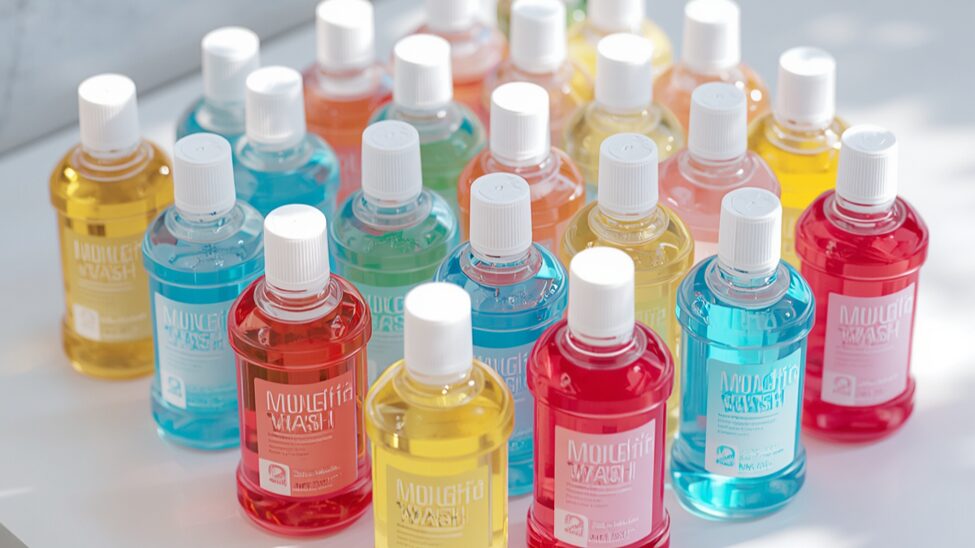
If you have started reaching out to mouthwash manufacturers, MOQ is probably one of the first terms you ran into. And if you are new to this side of the business, it can feel like a wall standing between you and getting your product made.
MOQ exists because of how production actually works, and once you understand what drives it, you are in a much better position to plan your project, set a realistic budget, and have a more productive first conversation with a manufacturer.
In this article, we break down what mouthwash MOQ means in practice, what factors push it up or bring it down, and what you can do as a new brand to approach your first production run more strategically.
MOQ stands for minimum order quantity. In mouthwash manufacturing, it refers to the smallest production run a manufacturer can take on while keeping the project operationally viable.
The MOQ you will encounter depends largely on the type of project you are bringing to a manufacturer. There are three common scenarios:
Knowing which category your project falls into before you contact a manufacturer helps you go into that conversation with the right expectations from the start.
MOQ requirements come from the realities of how production runs. The minimum is shaped by a combination of factors across the production process, and understanding them gives you a clearer picture of what you are working with.
Here is what is actually driving the number behind a mouthwash manufacturer MOQ:
When a oral care manufacturer gives you an MOQ, they are reflecting all of these factors together. The number is a product of the production process, and understanding that makes it much easier to work with.
MOQ ranges vary depending on the scope of your project, and any manufacturer who gives you a fixed number without understanding your specifications is giving you an incomplete picture. That said, these are general patterns you should know to set your expectations before you start making enquiries:
| Project Type | Typical MOQ Trend |
| Standard private label mouthwash | Lower MOQ |
| Custom flavor modifications | Moderate MOQ |
| Fully custom formulations | Higher MOQ |
| Specialty packaging formats | Variable MOQ |
Standard private label projects tend to carry the lowest MOQs because the formulation work is already done. Custom flavor modifications sit in the middle, since they require reformulation and testing but are not starting from a blank page. Fully custom formulations carry the highest MOQs because of the development investment involved before production even begins.
Specialty packaging formats introduce a variable that sits separately from the formulation. A custom bottle mold, for example, can push MOQ up significantly on its own, regardless of how straightforward the formula is.
Luckily, some manufacturers make this whole process a lot easier by helping you map out your needs before talk turns to hard numbers.
For instance, you can request an OraLabx sample kit to check out the formulation quality firsthand. It gives you a solid, real-world baseline to start the conversation, letting you pin down an accurate MOQ for your specific project before you commit to anything.
MOQ is not determined by one thing. It is the result of several variables coming together, and changing any one of them can move the number in either direction. Here are the main factors that influence your custom mouthwash MOQ.
Existing formulations carry lower MOQs than modified or fully custom ones. If you are open to working with a ready-to-produce formula, you will generally have more flexibility on the MOQ side. If you need something developed specifically for your product, factor in both the higher MOQ and the longer development timeline that comes with custom work.
Stock bottle formats are easier to source, carry lower component minimums, and keep your overall MOQ more manageable. Custom bottle molds are a different situation. Tooling costs for custom molds are significant, and the component minimums that come with them feed directly into your production MOQ. Specialty caps, pumps, and dispensers follow the same pattern. The more custom your packaging, the higher the MOQ.
Launching with a single flavor or variant keeps your production run focused and your MOQ straightforward. If you are planning to launch with multiple variants at the same time, each SKU carries its own MOQ requirement, which means your total order commitment grows accordingly. For most new brands, starting with one SKU and expanding from there is the more manageable approach.
Dedicated production runs, where your product is the only thing running on the line, give you the most control but also come with higher MOQ requirements. Shared or scheduled production slots can offer more flexibility, though availability depends on the manufacturer’s scheduling capacity at the time of your order.
For brands planning large-scale distribution such as mouthwash bulk supply, packaging and volume decisions play an even bigger role in determining MOQ.
There are practical choices you can make that keep your MOQ more manageable without compromising the quality of your product. Here is what actually works when you are trying to keep your mouthwash production minimum order quantity within reach:
A lower MOQ does not automatically mean lower financial risk, and thinking this through before you decide what to target will save you from a few common planning mistakes.
When production quantities are lower, unit costs go up. Setup costs, raw material purchasing, QC procedures, and filling line time are all spread across fewer units, which means each unit carries more of that overhead. A higher unit cost narrows your margin per sale and means it takes longer to recoup your launch investment.
Inventory planning is the other side of this. A lower MOQ means less stock on hand, which can feel like lower risk. But if demand comes in higher than expected, you run out of stock faster and need to go back into production sooner. This happens sometimes at short notice, which adds cost and pressure to your supply chain.
Before approaching a manufacturer, prepare a contracting company or registered entity, target market, approved budget, expected first-order volume, launch timeline and product brief. These inputs determine whether technical evaluation should begin.
The more prepared you are when you first contact a manufacturer, the more useful that conversation will be. A specific enquiry gets you a realistic MOQ range, a clearer lead time estimate, and a better sense of whether the manufacturer is a good fit for your project.
Before you reach out, have answers ready for the following:
Going into the conversation with this information ready means you get a more accurate and useful response, and it moves the project forward faster.
It helps to see how these factors play out in a real project. In a travel mouthwash OEM project we worked on, the buyer came in wanting a small-format mouthwash product for the travel retail market. The format requirements, specifically small bottles with tight leakage controls, shaped the MOQ conversation from the beginning.
Because the buyer chose to work with an existing formulation rather than developing a custom one, the formulation side of the MOQ stayed manageable. The packaging format was the more complex variable. Travel-size bottles require adjusted filling line settings and tighter quality controls than standard formats, which affected production scheduling and the minimum viable run size.
The buyer also launched with a single SKU rather than multiple variants, which kept the total order commitment focused and allowed the first production run to move through more efficiently.
You can read the full breakdown of how those decisions came together in the travel mouthwash OEM case study. It gives a concrete picture of how MOQ, packaging, and production planning connect when a project moves from concept to production.
It depends on the formulation type, packaging format, and number of SKUs involved. Standard private label projects using existing formulations and stock packaging tend to carry the lowest MOQs. Custom projects carry higher ones. Sharing your project details with a manufacturer directly is the most reliable way to get an accurate number.
Yes. Many manufacturers, including those offering private label mouthwash MOQ options, work with first-time buyers. Coming to the conversation with a clear project scope and realistic expectations makes the process much smoother.
Because custom development involves formulation work, testing, and regulatory review before production even begins. That upfront investment needs to be supported by a production run large enough to make it viable on both sides.
They can, and they often do. Custom bottle molds, specialty closures, and printed packaging all carry component minimums that feed into your overall MOQ. Choosing stock packaging is one of the most practical ways to keep your MOQ lower when you are starting out.
In some cases, yes. Flexibility on formulation or packaging gives you more room to work with, and manufacturers are generally more open to the conversation when you can outline your longer-term volume plans. Coming in with a clear picture of your project makes that discussion more productive for everyone.
It depends on your cash flow and how confident you are in demand. Lower MOQ gives you less exposure if the product takes time to gain traction. Lower unit cost improves your margin but requires a larger upfront commitment. Most new brands find it easier to start with a manageable MOQ and adjust as demand becomes clearer.
Yes, and for most new brands it is the more practical way to start. A single SKU keeps your production run focused, your MOQ straightforward, and your inventory easier to manage while you are still getting the product established.
Often because buyers do not account for the component minimums on the packaging side, or they underestimate how formulation complexity affects the production process. MOQ is not just about how much liquid gets filled. It reflects every variable across the production run, from raw materials to packaging components to QC procedures.
As discussed, your ultimate MOQ is dictated by real-world factory economics and variables like:
That is a lot of variables to balance, but a reliable mouthwash manufacturer can handle the technical logistics fast so you can get started.
At ORALABX, we eliminate the guesswork by providing completely transparent, upfront MOQ disclosures right from our first conversation. We help you map out exactly how your product choices affect your initial investment so you can scale safely without unexpected financial surprises.
Lock in a reliable production budget based on real factory capabilities.
Start your OEM project with the ORALABX team today for custom manufacturing assessment.
ORALABX manufacturing scope: ORALABX supports U.S. cosmetic oral-care manufacturing only. We do not manufacture U.S. OTC drug products, including fluoride anticavity toothpaste or therapeutic rinses. Product classification, claims and local regulatory responsibility must be confirmed before development.

Share your product type, target market, estimated volume and launch timeline. We will review the project scope and recommend the appropriate development path.
Best suited to brands, importers and distributors planning scalable commercial production.