Mouthwash products can be classified according to their primary functions, including fresh breath, antibacterial care, cavity protection, whitening, dry mouth relief, and children’s oral care. Each mouthwash type is formulated for a different oral hygiene purpose and may contain different active ingredients. This guide introduces the main mouthwash types, their functions, and their typical applications.
Mouthwash covers a wide range of oral care products. Some are built for fresh breath. Others focus on plaque control, gum support, cavity prevention, dry mouth relief, whitening, or more specialized needs.
Cosmetic mouthwash is primarily intended for freshness and daily oral hygiene, while therapeutic mouthwash is formulated to support specific oral care functions through active ingredients. So before choosing a product, it helps to understand how the category breaks down.
Cosmetic Mouthwash refers to mouthwash designed to freshen breath, improve taste, and leave the mouth feeling clean after use. It is commonly used for daily oral hygiene and focuses on cosmetic rather than therapeutic benefits. And therapeutic Mouthwash is formulated to support specific oral care functions, such as cavity protection, plaque control, or gum health. It typically contains active ingredients intended to deliver defined oral care benefits. Read more about cosmetic mouthwash vs therapeutic mouthwash.
Before choosing a formulation, it is helpful to understand the main types of mouthwash and their intended functions. Different mouthwash types are designed to support different oral care needs, ranging from daily fresh breath to cavity protection and specialized oral hygiene.
Antibacterial mouthwash is formulated with ingredients that help reduce oral bacteria as part of daily oral hygiene. It is commonly used to support plaque control, fresh breath, and overall oral cleanliness. It is typically used by people seeking antibacterial support as part of their daily oral care routine. A cosmetic mouthwash manufacturing scope can support CPC-based antibacterial formulation development.
Fluoride mouthwash contains fluoride as its primary active ingredient for cavity protection and enamel support. It is used to help strengthen tooth enamel and support preventive oral care. It is commonly used by children, adults, and families as part of their everyday oral hygiene routine.
Alcohol-free mouthwash is formulated without ethanol while providing daily oral hygiene benefits. It is commonly used for fresh breath, gentle mouth cleansing, and everyday oral care. It is suitable for people who prefer a milder mouthwash or wish to avoid alcohol-containing formulations. An alcohol free mouthwash manufacturer can help develop milder daily-use formulas.
Whitening mouthwash is formulated to help reduce surface stains and support cosmetic tooth whitening. It is used as part of a daily oral care routine to help maintain a brighter tooth appearance. It is commonly used by people who include whitening products in their regular oral care routine. A whitening mouthwash private label project should confirm whitening claims early.
Natural or herbal mouthwash contains botanical ingredients, plant extracts, or essential oil systems as part of its formulation. It is used for daily oral hygiene while emphasizing naturally derived ingredients. It is commonly used by consumers interested in botanical or plant-based oral care products.
Dry mouth mouthwash is formulated to help relieve oral dryness and improve mouth comfort. It is commonly used to moisturize the oral cavity and support saliva replacement or moisture retention. It is intended for people experiencing dry mouth caused by lifestyle, medication, aging, or other factors.
Sensitivity relief mouthwash is formulated to support the care of sensitive teeth and gums. It is used to provide gentle daily oral hygiene while helping manage tooth sensitivity. It is commonly used by individuals who experience sensitivity during brushing, eating, or drinking.
Chlorhexidine-based mouthwash contains chlorhexidine as its primary antimicrobial ingredient. It is used for short-term antibacterial oral care in professional or prescribed applications. It is typically used under the guidance of dental professionals or according to product instructions.
Kids’ mouthwash is specially formulated for children’s daily oral care with age-appropriate ingredients and flavors. It is used to encourage regular oral hygiene while providing gentle mouth cleansing. It is intended for children within the recommended age range stated on the product label.
Fresh breath mouthwash is formulated to help reduce oral odor and provide a long-lasting feeling of freshness. It is used as part of daily oral hygiene to support breath freshness throughout the day. It is commonly used by people looking for everyday breath care and oral freshness.
| Mouthwash Type | Common Users | Common Channel |
| Alcohol-Free | Broad daily-use consumers | All channels |
| Fresh Breath | Everyday breath-care users | Retail, e-commerce |
| Fluoride | Families and cavity-protection users | Pharmacy, retail |
| Whitening | Cosmetic and stain-care users | E-commerce, beauty |
| Natural / Herbal | Botanical and clean-label consumers | E-commerce, specialty |
| Antibacterial | Daily plaque-control users | Retail, pharmacy |
| Dry Mouth | Users managing oral dryness | Pharmacy, e-commerce |
| Sensitivity Relief | Sensitive-teeth users | Pharmacy, retail |
| Kids’ | Children’s daily oral care | Retail, family |
| Chlorhexidine | Professional / short-term use | Professional onlyv |
What are the different types of mouthwash?
The main types include fresh breath, alcohol-free, fluoride, antibacterial, whitening, natural or herbal, dry mouth, sensitivity relief, kids’, and chlorhexidine-based mouthwash. Each type serves a different oral care need.
What is the difference between cosmetic and therapeutic mouthwash?
Cosmetic mouthwash focuses on freshness and daily use. Therapeutic mouthwash is built around a specific oral care function and usually relies on active ingredients.
What ingredients are used in natural or herbal mouthwash?
Natural or herbal mouthwash is typically formulated with botanical extracts and essential oil systems such as menthol, thymol, or eucalyptol, often in alcohol-free carriers. Ingredient choices and labeling requirements vary by target market.
How does whitening mouthwash work?
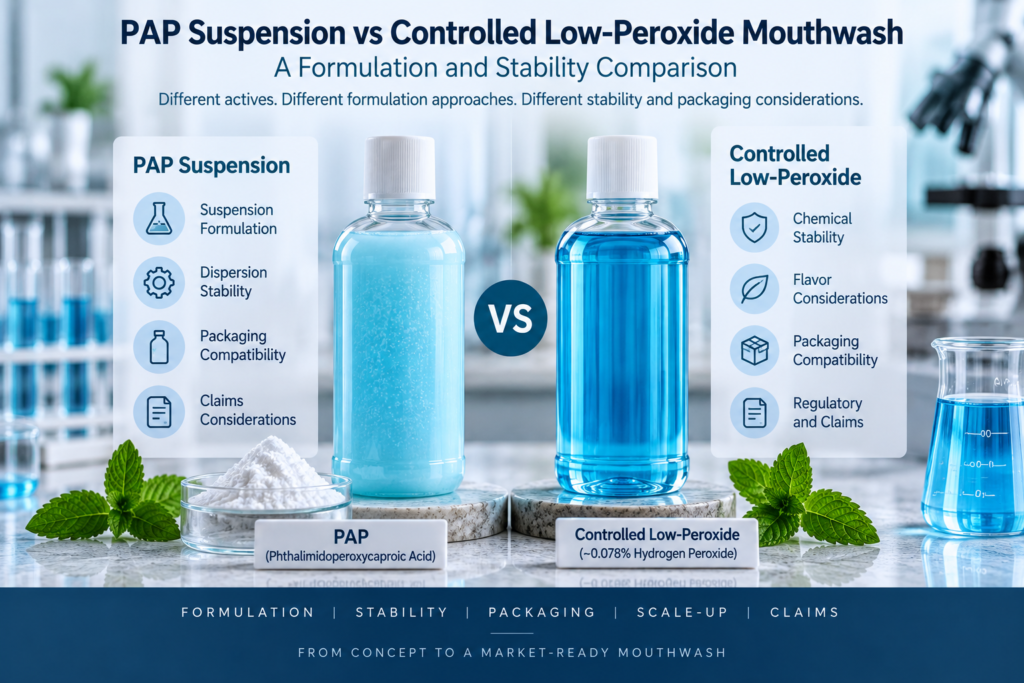
Whitening mouthwash is formulated to help reduce surface stains and support cosmetic tooth appearance. Some formulas use peroxide-based systems where permitted; others use stain-management ingredients. Permitted concentrations and whitening claims vary by market.
What is the difference between alcohol-free and alcohol-based mouthwash?
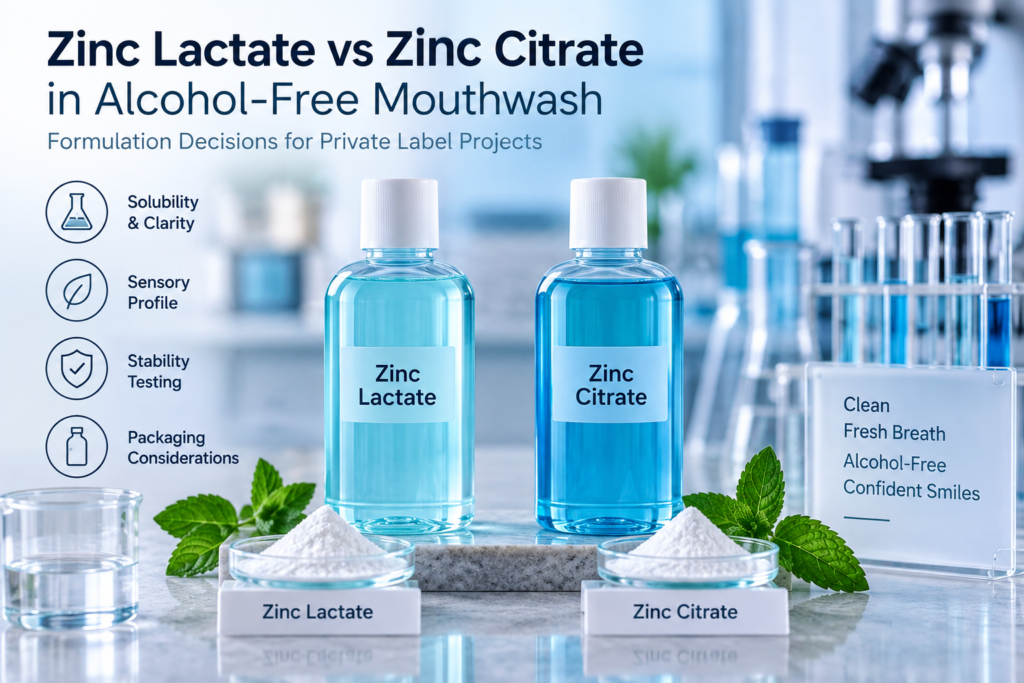
Alcohol-based mouthwash uses ethanol as a solvent or sensory component, while alcohol-free mouthwash delivers similar daily-hygiene functions without ethanol, giving a milder feel. Both formats can carry actives such as fluoride, CPC, or zinc.
There are many categories of mouthwash, grouped by their primary oral care function — fresh breath, antibacterial care, fluoride and cavity protection, whitening, alcohol-free daily care, natural or herbal, dry mouth relief, sensitivity relief, chlorhexidine-based, and children’s oral care. Each type is defined by its intended purpose and the active ingredients it contains. A broader classification also separates cosmetic mouthwash, which focuses on freshness and daily hygiene, from therapeutic mouthwash, which is built around specific oral care functions. Understanding how these categories map to function and ingredients gives a clear framework for organizing a private label mouthwash range, with the functional category remaining one of the most useful ways to classify mouthwash products.
Share your product type, target market, estimated volume and launch timeline. We will review the project scope and recommend the appropriate development path.
Best suited to brands, importers and distributors planning scalable commercial production.