In This Article
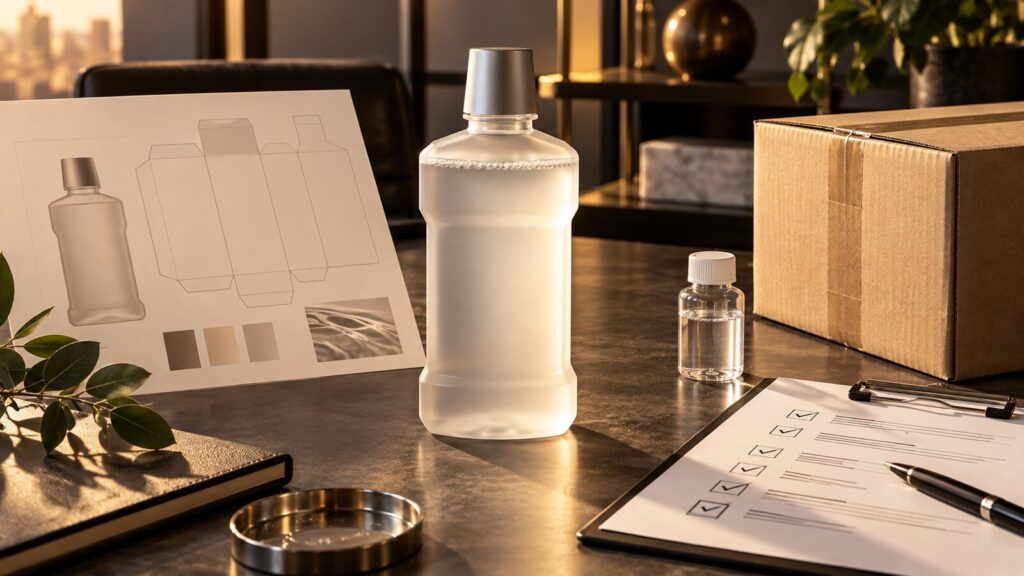
Many brands begin planning a mouthwash product with one simple question. How long will the entire process take? Some expect production to begin almost immediately after approving a formula, but a commercial mouthwash project actually moves through several connected manufacturing stages before anything is ready to ship.
These timelines reflect the dependency between formulation validation, packaging procurement, and production scheduling rather than a list of isolated steps you can rush through independently.
In this article, we walk through a typical private label mouthwash timeline, explain what happens during each stage, and show how these interconnected processes shape your overall project schedule.
Here is the timeline upfront so you know what you are working with before we get into the detail behind each stage.
These are typical timelines rather than guaranteed production schedules. Every project depends on factors like how quickly approvals come back, whether packaging is ready when it needs to be, and how readily materials are available.
A brand that moves fast through approvals and has packaging decisions locked in early can land on the shorter end of these ranges. A project with back and forth on artwork or formula revisions will naturally take longer.
Understanding this timeline before you start working with a mouthwash manufacturer is what lets you build a launch plan around realistic dates.
Every mouthwash project starts here. Manufacturers begin with prototype and formula work before production or packaging gets discussed because this is the stage that determines whether the product itself actually works the way it needs to.
This is not simply mixing ingredients and sending you a bottle. The formula gets prepared, refined where necessary, checked for compatibility, and confirmed with you before anything moves forward.
The timing for this stage breaks down as follows:
This stage takes that time because laboratory adjustments, compatibility reviews, and sample confirmation all have to be completed properly before commercial production can begin. Rushing this step risks production issues later that are far more expensive to fix than a few extra days at the development stage.
How much time this stage actually takes for your project depends heavily on whether you choose custom or stock formulation. If you are working from an existing stock formula, this stage moves quickly since the formulation work is already done.
If you are pursuing more customization, the timeline extends because new formulation work and additional testing rounds are involved, and that level of customization also affects your overall project cost.
Once your formula is approved, attention shifts to packaging, and this is where a lot of buyers get caught off guard.
Many assume production can start right after the formula sample is signed off, but manufacturers still need bottle selection, artwork approval, label preparation, and packaging procurement completed before anything can move into production.
Packaging often becomes the longest stage of a project because bottle suppliers, label printers, and packaging component vendors all operate on independent production schedules and approval timelines. A delay with any one supplier holds up the entire stage, even if every other part of your packaging is ready to go.
This is where your packaging choice makes a direct difference to your timeline.
Stock packaging moves faster because the bottle is already in production, the cap and closure are already compatible and confirmed, and decoration setup is already established for that format. You are essentially slotting your label into an existing process.
Custom packaging adds time because the bottle mold needs to be developed, the closure needs to be tested for compatibility with your formula, and decoration setup has to be built from scratch rather than reused.
Once your formula and packaging are approved, the manufacturer moves into the preparation phase. This involves:
The availability of raw materials plays a major role in how quickly a project moves to the line. In mouthwash private label manufacturing, the timeline often speeds up if the product uses a standard formula, as the manufacturer likely carries those specific ingredients in their regular inventory.
However, if the project requires specialty ingredients that are out of stock, the wait time for those materials to arrive can lengthen the timeline before assembly can begin.
Production begins once every necessary ingredient and packaging component is physically on-site. Because manufacturing relies on all components arriving on time, a delay in a custom ingredient shipment or a late packaging delivery can impact the final production date.
Standard production quantities allow manufacturers to schedule production more efficiently, while highly customized projects often require additional planning before production slots can be confirmed.
For example, meeting the standard Mouthwash MOQ allows the manufacturer to streamline line setup and offer a highly predictable turnaround time, whereas custom orders might require extra logistical planning.
Once manufacturing begins, the process moves through several distinct steps, including mixing, filling, packaging, quality inspections, and final product release. Every single step must be completed before any inventory is cleared for shipment.
For planning purposes, the most important thing to understand is how quality control fits into this timeline. Safety checks and testing are not quick tasks saved for the very end of the run. Instead, quality assurance is built into every stage of the schedule.
Every batch must be carefully verified against your approved specifications, and running these tests properly requires a set amount of time.
Typically, this entire stage takes about 2 to 4 weeks after all materials arrive on-site. This window covers both the physical assembly of the product and the parallel quality checks.
Attempting to rush this timeframe increases the risk of overlooking a defect, which can lead to major complications after the product has already shipped. Allowing the necessary time ensures your order is both accurate and safe.
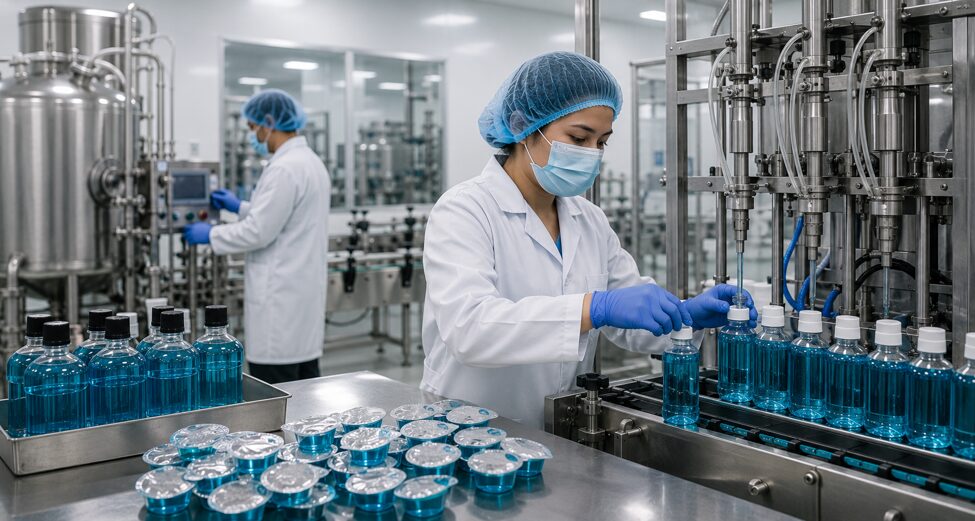
The final stage before your product leaves the factory covers final inspections, packing, documentation, and shipment coordination.
This is the part of the timeline that is easiest to overlook when you are planning a launch date, but it is very much part of the overall project schedule and needs to be accounted for.
If your product is entering the US market, compliance planning should already be well underway by this point rather than starting here. Waiting until shipment to think through documentation requirements is one of the most common ways projects lose time unnecessarily.
Our guide on FDA registration for US mouthwash brands covers more on regulations and what to confirm early so it does not become a bottleneck at this final stage.
There is no shortcut that skips manufacturing steps, but there is real room within this process for brands to move things along efficiently. Experienced buyers tend to land toward the shorter end of the timeline range because of decisions they make, not because their project skipped any stages.
Here is what actually helps:
The underlying principle behind all of this is reducing dependency bottlenecks across formulation, packaging, and procurement.
Projects move more efficiently when approvals are coordinated rather than sequential afterthoughts. They move faster when packaging decisions are locked in early instead of left until the formula is done, and when material procurement begins as soon as key specifications are confirmed rather than waiting for every last detail to be finalized first.
Working with a manufacturer who has run this process many times before also makes a measurable difference.
An experienced private label mouthwash manufacturer evaluation process helps you identify partners who can keep your project moving smoothly through each of these stages rather than letting avoidable delays stack up.
The standard total project lead time is 35 to 50 days from initial sample development through to a product ready for shipment. However, the timeline could very much go out of that range depending on factors like formula complexity, packaging customization, and how quickly approvals move at each stage.
Packaging involves multiple separate suppliers for bottles, labels, and decoration components, each running their own lead times and approval cycles. Formula development, by comparison, typically involves fewer parties and moves faster, especially when starting from an existing stock formula.
Yes. Starting with an existing, already-validated formula removes the formula development stage almost entirely, since there is no need for new lab work, stability testing, or multiple sample rounds before moving forward.
Production begins once both your formula and packaging have been approved and all required materials have arrived at the facility. It does not begin automatically after formula approval alone, since packaging and material readiness both have to be confirmed first.
Slow approval turnaround, late packaging decisions, multiple rounds of artwork revisions, and delayed material procurement are the most common causes of timeline slippage. Most delays come from decisions and approvals on the brand side rather than the manufacturing process itself.
Successful mouthwash projects come down to understanding how formulation, packaging, procurement, production, and quality control are connected rather than treating them as separate, independent activities.
Each stage depends on the one before it, and understanding that relationship is what allows you to plan a launch date that actually holds up.
Once you have a clear picture of how formulation approval, packaging readiness, and manufacturing scheduling fit together, you are in a much stronger position to plan a production timeline that is realistic rather than aspirational.
If you’re planning a private label mouthwash project, ORALABX can help you estimate a realistic production timeline based on your formula, packaging, and manufacturing requirements.
Reach out to our team and we will walk through what your specific formula and packaging choices mean for your launch schedule.
For a qualified commercial mouthwash project using a confirmed formulation direction, standard samples are usually prepared in 5–7 working days. This timing begins after the benchmark, flavor direction, target market, and sample requirements have been confirmed.
Commercial production is typically 45–60 days after the formula, packaging components, artwork, and deposit are confirmed. The window reflects two connected stages: packaging preparation normally requires about 25–30 days, followed by filling and production activities that normally require about 15–21 days.
A timeline should therefore be treated as a dependency plan, not as a production promise made before the specification is complete. See the ORALABX OEM process.

Share your product type, target market, estimated volume and launch timeline. We will review the project scope and recommend the appropriate development path.
Best suited to brands, importers and distributors planning scalable commercial production.