
Compliance

20 min read
August 08, 2026
Compliance
20 min read
August 08, 2026
In This Article
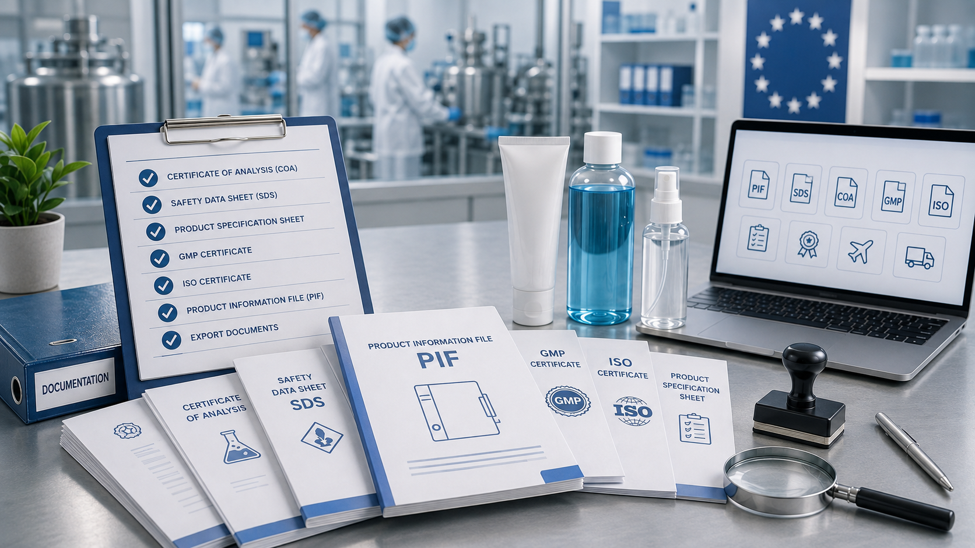
Preparing an oral care product for the European market involves more than developing a compliant formulation. Before a toothpaste or mouthwash reaches commercial production, the manufacturer should also be able to support the technical documentation needed throughout product development.
For brands, this makes documentation capability an important part of evaluating an OEM partner. An experienced EU-ready oral care manufacturer should have an organised process for preparing and managing manufacturer-side technical information while clearly defining which regulatory responsibilities remain with the brand and its designated Responsible Person.
This guide explains what documentation support buyers should expect from an oral care manufacturer, when that information typically becomes available during development, and how it fits into a practical cosmetic PIF checklist for EU market preparation.
A Product Information File (PIF) is the regulatory product file maintained by the Responsible Person for a cosmetic product placed on the EU market.
Throughout product development, the manufacturer generates technical information that contributes to that file, including formulation-related information, product specifications, and other supporting documentation prepared within the project scope.
Because the file is assembled over the course of a project, the quality of its technical information depends on the preparation that happens before production begins. Product specifications, ingredient information, manufacturing records, and other supporting documents are developed at different stages, not all at once when the product is ready to ship.
For buyers, this makes documentation capability an important part of selecting an OEM manufacturer. A well-organised documentation process helps ensure the necessary technical information is prepared as the project progresses, reducing the risk of delays when the product moves closer to EU market entry.
Preparing documentation for an EU oral care product is a shared process. The manufacturer contributes the technical information generated during product development and manufacturing, while the brand and its designated Responsible Person use that information to meet the regulatory requirements for placing the product on the EU market.
Understanding who is responsible for each part of the process helps buyers evaluate a manufacturer’s documentation capability and establish clear expectations before commercial production begins.
| Documentation / Activity | Manufacturer’s Role | Brand or Responsible Person’s Role |
| Product specifications | Prepare and provide the approved product specifications for the manufactured product. | Review and retain the specifications as part of the product documentation. |
| Ingredient and formulation information | Provide the technical information relating to the approved formulation within the agreed project scope. | Use the information when preparing the documentation required for the product. |
| Manufacturing information | Provide available manufacturing information and relevant manufacturing records within the agreed project scope. | Retain or reference the information where required for the product documentation. |
| Quality documentation | Provide available quality documents relating to the manufactured product, where applicable. | Review and maintain the documentation required for regulatory purposes. |
| Stability information | Provide available stability information where it has been generated for the project. | Determine whether additional testing or supporting evidence is required before market entry. |
| Product Information File (PIF) | Supply the relevant technical information generated within the agreed project scope that contributes to the PIF. | Compile, maintain, and assume regulatory responsibility for the complete Product Information File (PIF). |
| Product notification | Provide technical information where needed to support the notification process. | Complete the required EU product notification before placing the product on the market. |
| Labels and product claims | Manufacture the product according to the agreed formulation and packaging brief and provide supporting technical information where available. | Approve the final label, claims, and product information to ensure compliance with the applicable EU requirements. |
No single party prepares every part of the documentation needed for EU market entry.
A capable manufacturer should have an organised system for providing the technical information generated during development and production. The brand and its Responsible Person remain responsible for compiling the complete documentation package and fulfilling the applicable regulatory obligations.
Oral care products share many documentation requirements with other cosmetic products, but they also introduce additional technical considerations during development. Because toothpaste and mouthwash are formulated for use inside the mouth, manufacturers must consider the formulation, intended use, packaging, and supporting technical information together.
Some oral care products contain fluoride or other ingredients that are subject to specific conditions depending on the intended market and product category. These decisions influence ingredient documentation, product specifications, and supporting records.
Manufacturers should understand the target market before finalising the formulation so the required documentation can be prepared alongside the product.
Unlike products applied only to the skin, oral care products are formulated for use inside the mouth. Whether the product is a toothpaste, mouthwash, or another oral care format influences the technical information required during development.
The intended use also guides formulation decisions, packaging selection, and product evaluation.
Documentation extends beyond the formulation itself. Manufacturers also generate stability and packaging compatibility information during product development to help assess how the product performs in its intended packaging. Together with the appropriate supporting evidence, this information contributes to the assessment of product suitability over its intended shelf life.
Depending on the project, this may include available stability information, packaging compatibility assessments, or other technical records generated during development.
Claims such as whitening, fresh breath, sensitivity, or fluoride should be considered during product development, not after packaging has been designed. The proposed claims should align with the approved formulation and the supporting technical information available for the product.
A manufacturer can support this process by developing the product according to the agreed formulation and preparing the relevant technical information within the project scope. The final assessment of product claims and regulatory compliance remains the responsibility of the brand and its designated Responsible Person.
The evaluation of cosmetic claims for oral care products should also be considered alongside the available supporting evidence.
These product-specific considerations shape formulation decisions, packaging selection, technical evaluations, and the documentation prepared throughout development. Working with a manufacturer that understands these requirements helps brands prepare for the EU market with fewer documentation gaps later in the project.
Documentation support is not measured by the number of files a manufacturer is willing to share. What matters is whether the manufacturer has an organised process for preparing the technical information your project will need from formulation through commercial production.
During supplier evaluation, look beyond statements such as “we provide documentation.” Understand what information is available, when it becomes available, and how it supports product development.
A capable oral care manufacturer should be able to prepare and provide technical information generated during product development within the agreed project scope. This may include:
Many technical records are created only after the formulation, packaging, or testing programme has been confirmed.
Documentation capability also has clear boundaries. A professional manufacturer should protect confidential business information while providing the technical documentation required for the agreed project.
Buyers should not expect unrestricted access to:
Clear communication about these boundaries reflects good documentation management, not a lack of transparency.
The quality of a manufacturer’s documentation process is often more valuable than the number of documents it can produce. During supplier discussions, ask how technical information is prepared, reviewed, updated, and transferred as the project develops.
Useful questions include:
The answers provide a clearer picture of how the manufacturer manages documentation throughout the project. A well-organised process helps brands prepare for EU market entry while reducing delays caused by missing technical information.
Documentation develops alongside the project. As the formulation, packaging, testing, and production plans are confirmed, additional technical information becomes available to support EU market preparation.
Understanding this timeline helps brands request the right information at the right stage and set realistic expectations throughout the manufacturing process.
| Project Stage | Documentation Typically Discussed or Prepared |
| Initial project discussion | Confirm the destination market, product type, documentation expectations, and any project-specific technical requirements. |
| Formula development | Prepare formulation-related information, review ingredient documentation, and identify any documentation requirements that may influence product development. |
| Sampling and product evaluation | Develop product specifications, begin stability or compatibility work where applicable, and document formulation revisions if changes are made. |
| Formula and packaging approval | Finalise the approved formulation, packaging specifications, and production-ready technical information needed before manufacturing begins. |
| Pre-production preparation | Confirm which manufacturer-side documents are complete, which are still pending, and which information will be provided to support the brand and Responsible Person. |
| Commercial production and shipment | Generate production records and other agreed manufacturing documentation as they become available within the project scope. |
Production records are generated during manufacturing, while stability or compatibility work may continue until the agreed testing programme has been completed. Understanding when different types of documentation are typically prepared helps buyers plan more effectively and avoid requesting information before it is available.
Confirming documentation expectations early, tracking them throughout development, and reviewing them before production helps reduce last-minute documentation gaps as the product moves toward the EU market.
Documentation issues do not always begin with missing paperwork. They often start much earlier when important project information is not updated, reviewed, or communicated as development progresses.
The following examples highlight common documentation gaps and what buyers should confirm with their manufacturer before commercial production.
Formulations often evolve during development. For example, a toothpaste may begin as a fluoride-free formulation, but the brand later decides to include fluoride to support a different product positioning. Changes like this should be reflected across the relevant technical documentation so the approved product and its supporting information remain aligned.
Whenever a formulation is updated, buyers should confirm that the corresponding technical documentation is reviewed and updated to maintain consistency.
Supporting documentation depends on accurate ingredient information. If details about a newly introduced raw material or its supplier are requested shortly before production, preparing the necessary technical information may take longer than expected.
Buyers should ask how ingredient and supplier information is collected, reviewed, and maintained throughout development to keep documentation consistent as the formulation is finalised.
Some technical information can only be generated after agreed testing has started. For example, packaging compatibility may still be under evaluation while the final bottle or tube has already been selected for production planning.
Knowing which activities have been completed and which are still in progress helps buyers plan realistic launch timelines and avoid assuming that every supporting document is already available.
Marketing decisions sometimes change close to launch. A product originally developed around fresh breath may later be marketed with additional whitening or sensitivity claims. When this happens, the supporting technical information should be reviewed to confirm that it remains consistent with the approved formulation.
Buyers should discuss changes to product claims or artwork with the manufacturer as early as possible so any related documentation can be reviewed before production begins.
Delays can also occur when the manufacturer and the brand have different expectations about which documents will be prepared or when they will become available.
Buyers should confirm the documentation scope, expected delivery stages, and any information that remains the responsibility of the brand or its designated Responsible Person at the beginning of the project. Establishing these expectations early helps prevent misunderstandings later.
Most documentation gaps can be reduced through early planning and clear communication. An organised documentation process helps brands prepare for EU market entry with fewer delays as the project moves toward commercial production.
No. A manufacturer provides the technical information generated during product development and manufacturing, such as product specifications, formulation-related information, and available supporting documentation within the agreed project scope. The brand and its designated Responsible Person are responsible for compiling, maintaining, and taking legal responsibility for the complete Product Information File (PIF).
Yes, but the request should be reasonable. A manufacturer may explain the types of documentation it can provide and, where appropriate, may choose to share anonymised examples or document templates. This depends on the manufacturer’s policies and the nature of the project. Buyers should not expect access to confidential records, supplier information, or documentation belonging to other customers.
No. Some documentation is prepared during formulation development, while other records are only generated after packaging, testing, or commercial production reaches the appropriate stage. Understanding when different documents become available helps buyers plan their projects more effectively.
The Responsible Person is responsible for maintaining the Product Information File after the product is placed on the EU market. Manufacturers may retain their own production and quality records, but the complete PIF remains under the responsibility of the brand and its designated Responsible Person.
Changes should be communicated as early as possible because they may affect the supporting technical documentation. For example, introducing a new active ingredient or revising product claims may require related documentation to be reviewed and updated before the product proceeds to market.
It depends on how similar the products are. Variations in formulation, packaging, ingredients, intended use, or product claims may require different supporting documentation. Buyers should discuss individual product variants with the manufacturer instead of assuming that one documentation package will apply to every product.
Preparing an oral care product for the EU market starts long before commercial production. Alongside formulation development and manufacturing, buyers should evaluate whether their OEM partner can provide the technical documentation needed to support the project as it progresses.
At ORALABX, documentation readiness is considered throughout product development. Our team works with brands to prepare the manufacturer-side technical information generated during formulation, sampling, packaging, and production.
Planning a toothpaste, breath spray, or mouthwash project for the European market?
Talk to our team early in the development process. We’ll review your manufacturing requirements, discuss the documentation support available for your project, and prepare for commercial production with a structured manufacturing approach.

Share your product type, target market, estimated volume and launch timeline. We will review the project scope and recommend the appropriate development path.
Best suited to brands, importers and distributors planning scalable commercial production.


