
Compliance

20 min read
August 08, 2026
Compliance
20 min read
August 08, 2026
In This Article
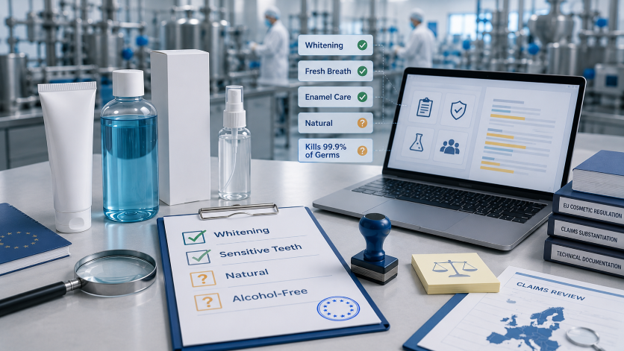
For many brands, product claims become a discussion after the formula has been developed and the first prototype has been approved. By that stage, changes to the intended claims may also require changes to the formulation, supporting documentation, packaging, or even the overall product positioning.
An experienced oral care manufacturing partner supporting EU-market projects evaluates these factors much earlier. Before prototype development begins, the target market, intended claims, formulation direction, ingredient suitability, and available documentation should be reviewed together to identify potential risks while changes are still easier to make.
This guide explains how manufacturers evaluate claim feasibility during oral care product development, where technical support ends, and why the final approval of product claims remains the responsibility of the brand and its appointed regulatory representative.
The EU distinguishes cosmetic products from medicinal products based on more than a single word or phrase. The product’s intended purpose, how it works, how it is presented to consumers, and the evidence supporting its claims all contribute to its regulatory assessment.
For cosmetic oral care products, the primary purpose is to clean, protect, perfume, keep the teeth and oral cavity in good condition, or maintain oral hygiene.
Products presented as treating or preventing disease, or those intended to restore, correct, or modify physiological functions through pharmacological, immunological, or metabolic action, may fall within a different regulatory framework.
This distinction is why manufacturers and brands should review claim direction before prototype development begins. A claim such as “helps maintain healthy gums” is generally consistent with cosmetic positioning, while claims relating to cavities or dental caries should be assessed in the context of the formulation, supporting evidence, intended product positioning, and the applicable regulatory requirements.
The assessment depends on factors such as the exact claim wording, the formulation, relevant active ingredients, supporting evidence, the product’s intended purpose and presentation, and the requirements of the destination market. Looking at one phrase on its own is rarely enough to determine how a product will be assessed.
Understanding this boundary early helps brands choose a formulation and claim strategy that can be properly evaluated before they invest in samples, packaging, or commercial production.
Many brands begin product development by focusing on the formulation first and the claims later. While this may seem like a faster approach, it can create unexpected challenges once the product moves into sampling, packaging, or market preparation.
For example, a brand may develop a whitening toothpaste based on a preferred ingredient combination and only later decide it should carry specific whitening claims.
During the review process, they may discover that the proposed claim requires different supporting documentation, changes to the formulation, or revised packaging. Addressing these issues after prototype development can increase both project costs and timelines.
An experienced manufacturer helps reduce these risks by reviewing claim feasibility before formulation work begins. This early evaluation considers several factors together, including:
These discussions help determine whether the proposed claims are realistic for the project before resources are committed to prototype development.
Claim feasibility is only one part of the evaluation process. Once the proposed claims have been reviewed, the manufacturer can assess whether the planned formulation supports those claims, identify any documentation that may be needed, and highlight potential issues that could affect development.
This allows formulation, documentation, and packaging decisions to progress together instead of being reviewed independently at different stages.
Reviewing claims early does not replace the brand’s regulatory responsibilities. The manufacturer can support formulation feasibility, technical discussions, available documentation, and the identification of potential claim risks.
Final decisions on market-specific claims, regulatory review, and label approval remain the responsibility of the brand and its appointed regulatory representative.
Before a claim appears on toothpaste or mouthwash packaging, it should be assessed against the six common criteria established under Regulation (EU) 655/2013. These principles help manufacturers and brands evaluate whether proposed wording is appropriate before formulation, packaging, and product documentation move further into development.
Every cosmetic claim should comply with the applicable legislation. A claim should not suggest that a cosmetic product performs a function that would place it within the scope of medicinal products.
For example, cavity-related claims should be assessed in the context of the exact wording, formulation and fluoride or other active ingredient strategy, available supporting evidence, intended product positioning, and the applicable regulatory interpretation for the target market, rather than on the wording alone.
Claims should accurately reflect the product’s composition and characteristics. A brand should only claim the presence of an ingredient or benefit if it is supported by the approved formulation.
For example, a toothpaste should not be marketed as “fluoride toothpaste” if the final formulation does not contain fluoride, or promoted as “SLS-free” if sodium lauryl sulfate is still part of the ingredient list.
Every claim should be supported by appropriate evidence. The level of evidence depends on the claim being made, but manufacturers and brands should be confident that the wording can be justified before it appears on product packaging.
For example, if a toothpaste is marketed with a whitening claim, the supporting evidence should be appropriate for that specific claim rather than relying on general assumptions about the ingredients used in the formulation.
Claims should present the product fairly and avoid exaggerating its performance or benefits.
For example, describing a mouthwash as providing “long-lasting fresh breath” should reflect the evidence available for the product. Claims that promise unrealistic or guaranteed results can create unnecessary regulatory risk.
Claims should focus on the strengths of the product without unfairly criticising competing products or ingredients.
For example, promoting a toothpaste as “fluoride-free” should not imply that fluoride-containing toothpaste is unsafe or inferior. The emphasis should remain on describing the product’s own characteristics.
Claims should be clear enough to help consumers understand what the product is designed to do without creating unrealistic expectations.
For example, describing a toothpaste as “helps remove surface stains” gives consumers a clearer understanding of the intended benefit than a broad statement suggesting dramatic whitening results without qualification.
These criteria provide a practical framework for reviewing oral care claims before they appear on product packaging. Applying them early in product development helps brands identify potential issues before they affect formulation, documentation, or packaging decisions.
The wording of a claim can significantly influence how an oral care product is evaluated. A small change in language may affect whether a claim remains within cosmetic positioning or creates additional regulatory considerations.
The examples below illustrate common claim patterns used during oral care product development. They are intended as discussion points during formulation and claim planning, not as a substitute for market-specific regulatory review.
| Claim Category | Examples Generally Consistent with Cosmetic Positioning | Examples That May Create Regulatory Concerns | Why It Matters |
| Whitening | Helps remove surface stains. Helps maintain a brighter-looking smile. | Whitens teeth by several shades. Clinically reverses tooth discoloration. | The wording should reflect the benefit supported by the product and available evidence. |
| Fresh Breath | Helps freshen breath. Provides long-lasting freshness. | Eliminates the cause of bad breath. Treats chronic bad breath. | Claims are generally expected to remain consistent with a cosmetic purpose and the available supporting evidence. |
| Plaque | Helps remove plaque as part of regular brushing. | Prevents plaque formation. Eliminates plaque permanently. | Assessment should consider whether the proposed wording remains consistent with the product’s cosmetic purpose and available supporting evidence. |
| Gum Health | Helps maintain healthy gums. Supports daily gum care. | Treats gum disease. Heals inflamed gums. | Claims implying treatment or prevention of disease should be reviewed in the context of the product’s intended purpose, supporting evidence, and the applicable regulatory framework. |
| Sensitivity | Helps reduce the feeling of tooth sensitivity.* | Permanently treats sensitive teeth. Cures dentine hypersensitivity. | The proposed wording should be assessed alongside the product’s formulation, supporting evidence, and intended market. |
| Antibacterial | Helps keep the mouth feeling clean. | Kills harmful oral bacteria. Eliminates bacterial infection. | Claims suggesting an antibacterial or therapeutic effect may require additional regulatory assessment depending on the wording, supporting evidence, and intended product positioning. |
| Caries | Helps maintain healthy teeth as part of a good oral hygiene routine. | Prevents cavities. Protects against dental caries. | Claims relating to cavities should be assessed in the context of the exact wording, formulation and fluoride or other active ingredient strategy, available evidence, intended positioning, and the applicable regulatory interpretation for the target market. |
Note: The examples above illustrate common claim patterns during product development. They should not be interpreted as automatic approval or rejection for every product or EU market. Final claim wording should always be reviewed in the context of the formulation, supporting evidence, and the intended market.
Before prototype development begins, this table can serve as a practical discussion tool between the brand and its manufacturer. Reviewing proposed claims alongside formulation direction helps identify potential wording changes, documentation needs, or ingredient considerations before they affect sampling, packaging, or commercial production.
Fluoride is one of the most common active ingredients used in oral care products, but it also comes with specific labelling considerations. If a toothpaste or mouthwash contains fluoride, the brand and its appointed regulatory representative should confirm the applicable labelling requirements before finalising artwork or approving packaging for production.
These requirements depend on factors such as the fluoride compound used, its concentration, the intended user group, and the applicable provisions under Annex III of the EU Cosmetics Regulation. Confirming these details early helps ensure that the formulation, product label, and supporting documentation remain aligned throughout development.
Fluoride claims should also be evaluated alongside the formulation itself. A product described as a fluoride toothpaste should contain the approved fluoride ingredient and concentration reflected in the final formulation and supporting documentation. Any changes to the formulation may require the proposed claim or label wording to be reviewed before commercial production.
An experienced manufacturer can support this process by confirming the formulation details, providing the available technical documentation for the approved product, and identifying any labelling considerations that should be addressed before packaging is finalised.
The final review of label content, market-specific requirements, and regulatory compliance remains the responsibility of the brand and its appointed regulatory representative.
Confirming fluoride labelling requirements before artwork approval helps reduce unnecessary revisions later in the project and keeps formulation, documentation, and packaging moving in the same direction.
Claim substantiation is the process of ensuring that a product claim is supported by appropriate evidence. The type of evidence depends on the claim being made, but it should be considered before the claim appears on product packaging or marketing materials.
During product development, an experienced manufacturer can support this process by:
These activities help brands identify potential issues early, reducing the likelihood of costly formulation or packaging changes later in the project.
However, substantiating a claim is not the same as approving it for the market. The final assessment of claim wording, regulatory compliance, and label approval remains the responsibility of the brand and its appointed regulatory representative.
Claims such as fluoride-free, SLS-free, paraben-free, and natural are common in oral care products, but they should be used carefully. In the EU, these claims should describe the product accurately without implying that ingredients excluded from the formulation are unsafe or undesirable.
For example, a fluoride-free toothpaste may be positioned as a product developed without fluoride, but the claim should not suggest that fluoride-containing toothpaste is harmful or less safe. The same principle applies to SLS-free, paraben-free, and similar claims.
The focus should remain on the characteristics of the product itself rather than making negative comparisons with ingredients permitted for use in cosmetics.
Natural claims also require careful consideration. If a toothpaste or mouthwash is marketed as natural, the claim should be consistent with the product’s formulation and supported by the information available for the finished product. Broad statements that could mislead consumers about the nature or composition of the product should be avoided.
During product development, manufacturers can help assess whether these claims align with the proposed formulation and identify any supporting documentation that may be needed. Final approval of the claim wording and its compliance with the requirements of the intended market remains the responsibility of the brand and its appointed regulatory representative.
Although this guide focuses on the EU market, brands planning to sell oral care products in the UK should be aware that cosmetic claims are also subject to UK requirements.
The UK continues to apply the same six common claim criteria under Regulation (EU) No. 655/2013 as retained in UK cosmetics legislation, while cosmetic advertising is overseen by the Advertising Standards Authority (ASA) under the UK Advertising Codes.
The Cosmetic, Toiletry and Perfumery Association (CTPA) also provides industry guidance to help companies understand and apply the UK claims framework. Brands intending to launch in both the EU and the UK should review their claim strategy for each market before finalising product labels and marketing materials.
Yes. An experienced manufacturer can review your proposed claims alongside the intended formulation, target market, ingredient selection, and available documentation. This helps identify potential issues before prototype development starts. Final approval of product claims remains the responsibility of the brand and its appointed regulatory representative.
It can. Changes to ingredients or the formulation may affect the supporting evidence available for certain claims. If the formulation changes during development, the proposed claim wording should be reviewed to ensure it still aligns with the finished product.
Not always. While the EU Cosmetics Regulation provides a common framework, brands should confirm that their claim wording is appropriate for the intended market, language, and product positioning before launch.
Yes. Discussing claim direction before formulation and sampling helps manufacturers assess ingredient suitability, identify documentation requirements, and reduce the risk of reformulation or packaging changes later in the project.
No. A manufacturer can provide technical support, review formulation feasibility, and supply available documentation within the agreed project scope. The final review of claims, labels, and regulatory compliance remains the responsibility of the brand and its appointed regulatory representative.
It helps to have a clear idea of your target market, intended product claims, preferred formulation direction, packaging concept, and product positioning. This information allows the manufacturer to assess claim feasibility before development begins.
Successful claim development starts long before product packaging is designed. Evaluating claim direction alongside formulation, documentation, and the intended market helps reduce avoidable revisions and keeps product development moving in the right direction from the outset.
At ORALABX, we support brands through formulation feasibility reviews, technical discussions, and the available documentation generated within the agreed project scope.
If you’re planning to launch a toothpaste or mouthwash in the European market, contact our team to discuss your project requirements. We’ll help you evaluate formulation direction, claim feasibility, and manufacturing considerations before prototype development begins.

Share your product type, target market, estimated volume and launch timeline. We will review the project scope and recommend the appropriate development path.
Best suited to brands, importers and distributors planning scalable commercial production.


