Breath Spray

15 min read
July 24, 2026
Breath Spray
15 min read
July 24, 2026
In This Article
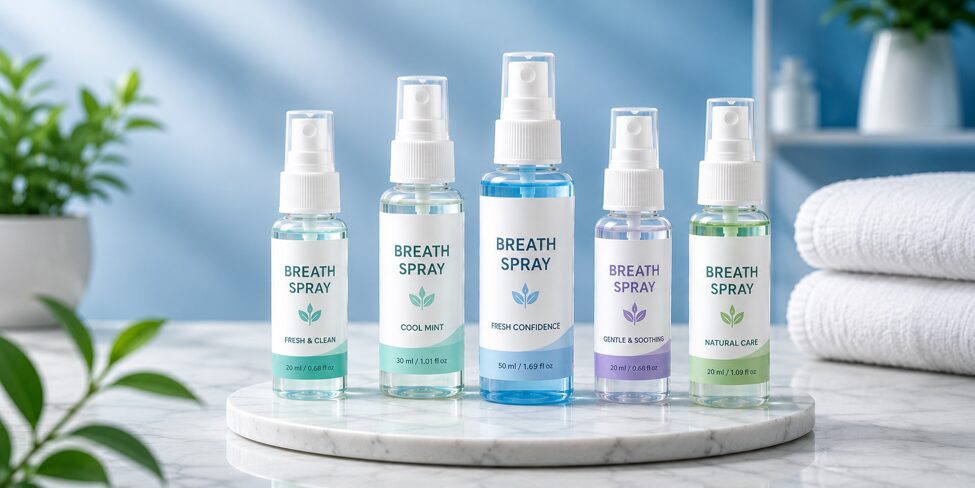
Many oral care brands add a private label breath spray to their product range to expand their product offering and meet different consumer preferences. Before starting product development, however, it helps to understand how breath spray differs from similar oral care products and the key considerations that shape the finished product.
Developing a breath spray involves more than selecting a formula. Product format, packaging, spray delivery, flavour experience, and intended positioning all influence how the product is designed and prepared for commercial production.
Understanding these factors early makes it easier to evaluate the category and have more productive discussions with a manufacturer.
This guide explains the key considerations involved in private label breath spray development, helping brands understand the category before moving into OEM product development.
A private label breath spray is an oral care product manufactured by an OEM and sold under your own brand name. Instead of developing and producing the product in-house, brands work with a manufacturer to create a breath spray that aligns with their product concept, target market, and commercial objectives while production is managed by the OEM.
Although breath spray and mouthwash both belong to the oral care category, they are developed for different methods of use. Mouthwash is formulated as a rinse, while a breath spray delivers a small amount of product directly into the mouth through a spray mechanism.
Because the product is dispensed differently, manufacturers evaluate the formulation, spray performance, flavour experience, bottle design, and packaging compatibility together instead of simply adapting an existing mouthwash formula to a smaller bottle.
Because the product is dispensed differently, manufacturers evaluate the formulation, spray performance, flavour experience, bottle design, and packaging compatibility together instead of simply adapting an existing mouthwash formula to a smaller bottle.
These decisions are evaluated as one system to help ensure the finished product performs as intended and is suitable for commercial production.
If you’re considering adding breath spray to your oral care range, working with an experienced private label breath spray manufacturer can help you evaluate these decisions before development begins.
When exploring the market, you will often see products described as an oral spray, oral mist, or mouth spray. Although these names may suggest different product categories, they often refer to similar types of oral care products. The terminology varies between brands and manufacturers, so the product name alone does not always indicate how the product has been developed.
Although these names are often used interchangeably, the product name alone does not determine how a breath spray performs. Products marketed as an oral spray, oral mist, or mouth spray may use different packaging systems and formulations depending on the brand’s objectives.
Instead, manufacturers evaluate practical factors such as pump output, droplet pattern, fill size, formula characteristics, intended use, and overall product positioning. Together, these decisions influence how the product feels during use and which packaging platform is most appropriate.
For example, two products described as an “oral spray” may deliver noticeably different spray experiences because they use different pump systems or formulations. Likewise, products marketed as an “oral mist” or “mouth spray” may share similar packaging components while targeting different market segments.
Rather than selecting packaging based on the product name, manufacturers first define the intended user experience and then recommend the bottle, pump, and formulation combination that best supports that objective.
Breath spray can serve different purposes within an oral care product range. Before development begins, brands usually define the role the product will play because this influences formulation, packaging, flavour direction, and the overall development approach.
Some of the most common positioning strategies include:
Some brands position breath spray as a convenient product for quick, everyday breath freshening. These products typically emphasize portability, ease of use, familiar flavour profiles, and broad consumer appeal, making them suitable for regular use throughout the day.
During OEM development, manufacturers often recommend flavour directions with broad sensory acceptance, while practical stock packaging and simpler customization options may help support a faster development timeline.
Other brands develop breath spray to complement existing oral care products such as toothpaste, mouthwash, or chewing gum. Instead of replacing these products, breath spray becomes an additional option that extends the brand’s oral care portfolio and offers customers a convenient way to freshen their breath between brushing.
Manufacturers may also align the flavour profile, bottle style, and packaging decoration with the existing product range to create a more consistent brand presentation across the portfolio.
Some brands position breath spray as a premium oral care product with greater emphasis on presentation and user experience. This may involve more distinctive packaging, refined flavour profiles, or a higher level of customization to create a product that reflects a premium brand image. Premium projects may also require more specialized packaging components, additional flavour refinement, and longer validation or sourcing timelines before commercial production.
Defining the product’s positioning early helps manufacturers recommend a development approach that aligns with your objectives. It also provides clearer direction for formulation, packaging, flavour development, and the level of customization required before sample development begins.
If you’re interested in the technical factors behind flavour performance and sensory experience, our article on the science of fresh breath sprays explains how these elements influence the finished product.
Before starting an OEM breath spray project, it’s important to define the key requirements that will guide your discussions with the manufacturer. Having a clear product direction allows the OEM to evaluate your project more efficiently and recommend a suitable development approach.
Before your first discussion, manufacturers will typically want to understand:
Preparing this information before your first discussion allows the manufacturer to evaluate your project more effectively, identify potential development considerations, and recommend practical next steps.
If you’d like to understand the complete OEM development process, including formula selection, sample development, packaging approval, and commercial production, see our guide on how to launch a private label breath spray brand.
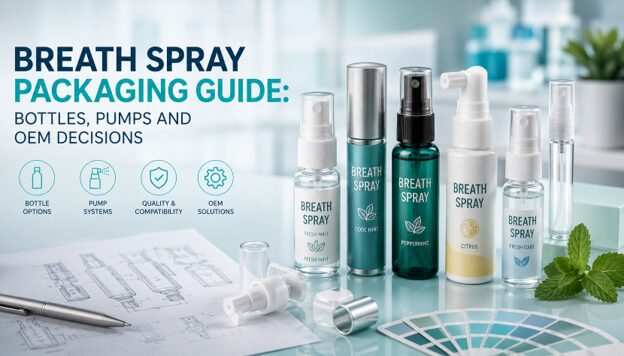
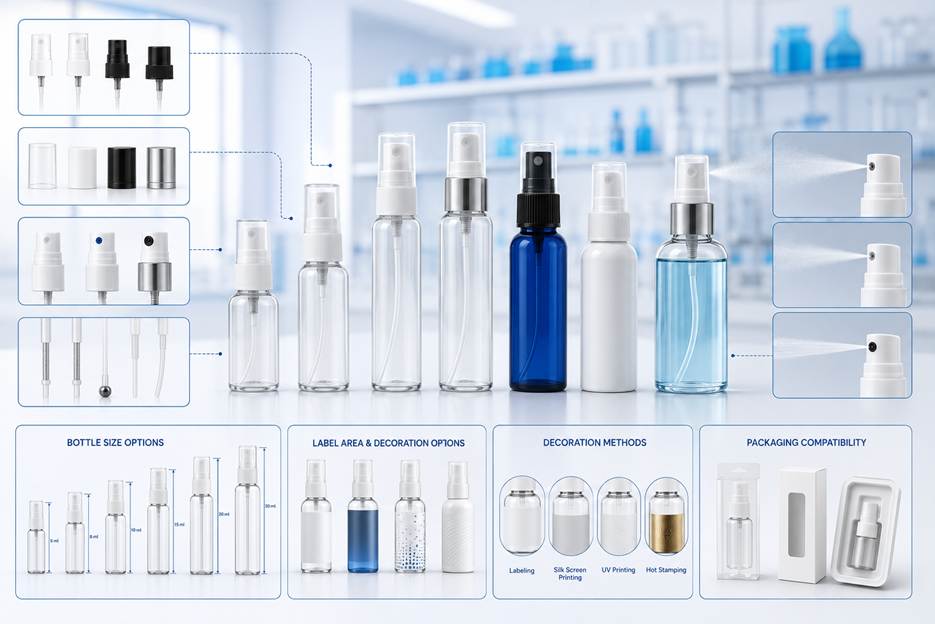
Packaging plays an important role in breath spray development because it influences both how the product performs and how customers experience it. While appearance is one consideration, manufacturers also evaluate how the packaging supports the formulation, spray performance, portability, and day-to-day use.
Breath spray packaging includes all the components that deliver and protect the product, not just the bottle itself. The bottle, spray pump, cap, and other packaging components are selected as a complete system to ensure they work reliably with the chosen formulation throughout the product’s shelf life.
When evaluating packaging, manufacturers typically consider:
Packaging affects both the user experience and the product’s suitability for commercial production. A well-designed breath spray should deliver consistent spray performance while using packaging components that are compatible with the formulation, commercially available, and suitable for reliable large-scale manufacturing.
Key user experience considerations include:
By considering packaging performance and user experience together, manufacturers can recommend packaging systems that support both commercial production and the product’s intended use. This helps ensure the finished breath spray is practical to manufacture while meeting customer expectations.
Before finalizing the packaging design, manufacturers also confirm that the selected bottle, spray pump, and other packaging components are commercially available and suitable for the planned production volume.
A bottle or pump shown in a reference image may not be available at the required minimum order quantity, which can affect cost, lead time, and production feasibility. For this reason, artwork should only be finalized after the bottle dimensions, label area, decoration method, and cap and pump platform have been confirmed.
Changes to these components after artwork approval may require artwork revisions and additional packaging compatibility reviews.
Preparing some basic project information before contacting a private label breath spray manufacturer helps make the initial discussion more productive. Instead of spending time defining the product concept from scratch, manufacturers can better understand your objectives and recommend development options that fit your project.
Before reaching out, it helps to prepare the following information:
Not every detail has to be finalized before the first discussion. However, manufacturers should at least understand your target market, expected first order quantity, bottle direction, formula objectives, and launch timeline before recommending a packaging platform, development route, or quotation basis.
If you’re ready to discuss your project with an experienced OEM mouth spray supplier, contact ORALABX to begin the conversation.
Understanding how private label breath spray products are developed is an important first step before choosing a manufacturing partner.
From product positioning and formulation options to packaging considerations and project planning, having a clear understanding of these decisions helps brands communicate their requirements more effectively and move into development with greater confidence.
Whether you’re exploring the category for the first time or refining an existing product idea, ORALABX can help you evaluate your options and determine the most suitable development approach for your brand.
Learn more about our private label breath spray manufacturing services or contact ORALABX to discuss your project with our team.

Share your product type, target market, estimated volume and launch timeline. We will review the project scope and recommend the appropriate development path.
Best suited to brands, importers and distributors planning scalable commercial production.