Breath Spray

18 min read
July 12, 2026
Breath Spray
18 min read
July 12, 2026
In This Article

So, you have decided breath spray is the right format for your brand. Before you request samples or ask for a quote, it helps to understand what actually goes into developing the product on the manufacturing side.
A breath spray is not simply mouthwash in a smaller bottle. The pump changes how the product is delivered, and its spray output, mist quality, and consistency affect how much formula reaches the mouth and how the product feels during use. This means the formula, bottle, and dispensing system have to be developed to work together.
This guide walks you through the full launch process, from defining your product requirements to moving into commercial production, so you know what to prepare before speaking with a breath spray manufacturer.
It is easy to think of breath spray as mouthwash packaged in a smaller bottle. From a manufacturing perspective, however, the dispensing system changes how the product has to be developed.
A breath spray uses a pump to deliver a small, controlled amount of formula with each spray. The formula has to move consistently through the selected pump and produce the intended spray pattern without leakage or uneven output.
Two pumps may look almost identical from the outside but release different amounts of formula with each actuation. A higher-output pump may make the same flavour feel more intense and use up the product faster, while a lower-output pump may produce a lighter experience and increase the approximate number of sprays per bottle. Mist quality can also change how the spray feels in the mouth.
This is why breath spray product development is often packaging-driven. The bottle and pump system can determine your MOQ, unit cost, spray performance, and overall consumer experience. Changing one component may also affect filling performance and production efficiency, so the bottle and pump are evaluated as one packaging system.
An experienced breath spray manufacturer will therefore look at the formula and dispensing system together before samples are developed. An oral breath spray manufacturer should also evaluate pump output and leakage risk early.
Before formulation begins, you need to define the physical format of your breath spray. Start with the intended fill size, general bottle format, and how you expect customers to use the product.
Breath sprays typically come in smaller fill volumes, often around 8 to 20 ml. The right size depends partly on the product experience you want to create. For example, a compact spray designed for carrying around may have different packaging requirements from a larger format intended for more frequent use.
Fill size also affects the approximate number of sprays a customer gets from each bottle. A buyer comparing an 8 ml and 20 ml format should therefore look beyond bottle capacity and consider how many uses the product may provide with the selected pump output. This can affect how customers perceive the retail value of the finished product.
Once the fill size is clear, the manufacturer can narrow down suitable bottle and pump systems and evaluate packaging compatibility, filling line setup, and unit cost.
That is why format and fill size are defined early in breath spray product development. They give the manufacturer a practical starting point for evaluating which packaging and production setup can support your product.
Once the product format is clear, the next step is defining what you want the formula to be like. This includes decisions around flavour, alcohol content, and how intense you want the spray to feel during use.
These preferences help the manufacturer recommend an existing formula or develop a custom one. However, the formula cannot be evaluated separately from the spray format you selected in Step 1.
The same flavour can feel stronger or weaker depending on how the pump delivers it. A pump that releases more formula per actuation may create a more intense flavour experience, while a finer mist with smaller droplets may spread the formula differently across the mouth.
This is why a flavour that performs well in bottled mouthwash may need to be adjusted when used in a breath spray.
When reviewing formula samples, consider the flavour together with the selected pump and spray output rather than approving the liquid on taste alone. The manufacturer may need to adjust the flavour system or spray setup to achieve the sensory experience you want.
Spray delivery is only one part of flavour performance. Flavour volatility, binding, and how the flavour holds up over shelf life also need to be considered during development. We explain these factors in more detail in our guide to the science of fresh breath sprays.
Once the formula direction is clear, the next step is selecting a bottle and pump system that can deliver it consistently. These are not two separate packaging decisions. The bottle, pump, and formula have to work together as one system.
When evaluating a bottle and pump combination, the manufacturer will typically look at:
These checks help confirm that the selected packaging can deliver the formula as intended. If a pump does not work consistently with the formula, the result may be an uneven spray, poor mist quality, leakage, or a different amount of product being released from one actuation to the next.
The bottle choice matters here too. Changing the bottle can affect pump compatibility, filling performance, and production efficiency. This is why both components are evaluated together rather than selected independently based on appearance or individual preference.
The importance of the dispensing system also shows up in the project cost. The pump system may account for around 60 to 80% of the unit cost, making packaging a major cost driver in breath spray production.
However, selecting the lowest-cost pump does not always lead to the lowest commercial risk. A lower-quality pump may produce inconsistent spray output, leakage, or poor mist quality. It may also create more rejected units during filling if the components do not perform consistently on the production line.
This is why pump selection should be based on both cost and performance. Paying less for the component only makes commercial sense if the pump can deliver the formula consistently and support a reliable consumer experience.
The small fill volume of a breath spray can make it seem like the product should require a smaller production order. Minimum order quantities are driven more by packaging supply and production efficiency than by the amount of liquid in each bottle.
Bottle and pump suppliers usually have their own production minimums. The filling and packaging process also needs a commercially practical run size. Together, these requirements help determine the order quantity a manufacturer can realistically produce for your project.
As a planning reference, bottle MOQ is typically around 10,000 to 20,000 units. The exact requirement can vary depending on the supplier minimums for your selected bottle and pump, pump quality, decoration requirements, packaging specifications, and production setup.
These packaging decisions also affect cost. Indicative FOB pricing may range from around USD 1.35 to 3.50 per unit, while the pump system alone may account for around 60 to 80% of the unit cost. This is why changing the pump or packaging specification can have a noticeable effect on the commercial plan.
A smaller fill volume therefore does not automatically mean a lower MOQ or a cheaper finished product. The liquid is only one part of the production system, while the bottle and pump can represent a significant share of both the supply requirements and unit cost.
These packaging-driven requirements are worth reviewing closely with your manufacturer before you commit to an order quantity, since the bottle and pump specification you choose can shift both your MOQ and your final unit cost more than the formula itself. An Amazon DTC mouthwash manufacturer can help brands compare launch volume, packaging cost, and repeat-order planning.
Once the formula and packaging direction are defined, the manufacturer can move into prototype and sample development. At this stage, the sample should be evaluated as a complete breath spray system rather than just a liquid formula.
When you receive a sample, do not judge it on flavour alone. Test:
The manufacturer will also evaluate formula compatibility, pump performance, and fill volume. Together, these checks help identify problems that may not be obvious from tasting the formula alone.
It is also normal for the first prototype not to become the final production formula. The purpose of sample evaluation is to identify what needs to be adjusted before commercial packaging and production materials are confirmed. You may go through one or more refinement rounds to adjust flavour intensity, spray feel, or pump performance before approving the final sample.
Both the formula and dispensing system need to be approved before the project moves forward. Approving the liquid on its own can leave pump or packaging issues undiscovered until later in development.
For planning purposes, prototype samples typically take 5 to 7 working days, while formula development typically takes 7 to 14 working days, depending on the adjustments required.
Once the formula and pump system have been validated, the focus shifts from testing the packaging system to preparing it for commercial production.
At this stage, you finalize the bottle and pump specifications, decoration requirements, and artwork that will be used for your private label breath spray brand. With those details approved, the manufacturer can coordinate the supply of the bottles, pumps, and any printed or decorated packaging components needed for production.
These approvals also affect the production schedule. Bottle and pump procurement follow supplier lead times, while printed or decorated components may require separate setup and approval before they are ready for filling. Delays in finalizing artwork or packaging specifications can therefore hold up the next stage of the project.
The goal at this point is to make sure the approved packaging system is ready for procurement and production preparation before commercial filling begins.
Once the formula, bottle, pump system, packaging materials, and artwork are approved, your breath spray project can move into commercial production planning.
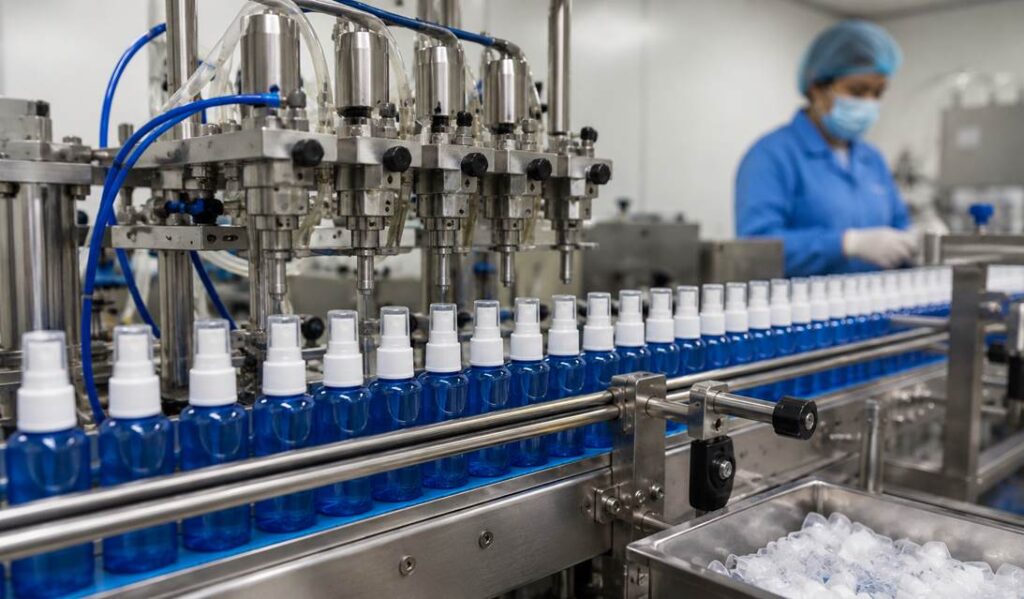
The manufacturer coordinates material arrival and filling line scheduling before commercial filling begins. The product then moves through filling, packaging, and quality control before it is prepared for shipment.
Production typically takes 2 to 4 weeks after all required materials arrive, while the overall lead time from project start is usually around 35 to 50 days. The exact timeline depends on how quickly the complete product system is ready for production.
Formula approval alone does not mean the project is ready for production. The pump and bottle system must be validated, artwork approved, and all required packaging materials confirmed and available before the production run can be scheduled.
Production readiness therefore depends on the complete product system coming together at the same time. The formula, pump, bottle, artwork, packaging supply, and production schedule all need to be confirmed before commercial filling begins. If one part is still outstanding, the project may not be ready to move into production even when everything else has been approved.
Although these steps are explained in sequence, OEM projects do not always move through them one at a time. Formula development, packaging planning, artwork preparation, and production scheduling can overlap, allowing different parts of the project to progress in parallel.
Projects generally move faster when these activities are coordinated together rather than waiting for one stage to be completely finished before starting the next. This is why early decisions about the complete product system matter throughout breath spray development.
Before requesting samples or a quotation, it helps to have a clear idea of the product you want to develop. You do not need to have every technical detail figured out, but the manufacturer needs enough information to understand the direction of your project.
Be ready to discuss:
You do not need to select a technical pump specification on your own before contacting a private label breath spray manufacturer. If you have a preference for the type of spray experience you want, explain that instead. The manufacturer can use your product requirements to evaluate suitable bottle and pump systems.
A clear product brief also makes it easier to identify feasibility issues early and gives the manufacturer the information needed to move the project into sample or quotation discussions.
Bottle MOQ is typically around 10,000 to 20,000 units. The final order requirement depends on supplier minimums for your selected bottle and pump, as well as the wider packaging specifications.
Indicative FOB cost typically ranges from USD 1.35 to 3.50 per unit. Packaging is a major cost driver, and the pump system alone may account for around 60 to 80% of the unit cost.
Breath spray fill volume typically ranges from 8 to 20 ml. The right size depends on the intended product format, how you expect customers to use the spray, and the approximate number of sprays you want each bottle to provide.
The pump affects the spray pattern, mist quality, and amount of product released with each actuation. It also needs to work consistently with the formula and selected bottle to reduce the risk of leakage or uneven spray performance.
Prototype samples typically take 5 to 7 working days, while formula development usually takes 7 to 14 working days. The overall lead time from project start is typically around 35 to 50 days, depending on formula, packaging, and material readiness.
Yes. A custom breath spray formula can be developed around your flavour direction, alcohol requirements, and preferred sensory intensity. These requirements are evaluated alongside the selected spray system to make sure the formula performs properly in the finished product.
A successful breath spray project starts with treating the formula, bottle, and pump as one product system. Fill volume, spray performance, pump compatibility, and packaging supply all influence how the product moves from an idea into commercial production.
At ORALABX, we support private label breath spray development from initial format and formula planning through pump system validation, sampling, packaging coordination, and OEM production. Each stage is planned around how the complete product needs to perform and be produced at scale.
Ready to launch your private label breath spray brand? Talk to our breath spray manufacturing team about your product requirements and take the first step toward developing your spray.Talk to our breath spray manufacturing team about your product requirements and take the first step toward developing your spray.

Share your product type, target market, estimated volume and launch timeline. We will review the project scope and recommend the appropriate development path.
Best suited to brands, importers and distributors planning scalable commercial production.