In This Article
An oral care manufacturing RFQ should help a supplier understand the project well enough to give a comparable commercial response. A message that says only “Please quote private label toothpaste” leaves too many variables open: formula status, target market, packaging, volume, documentation, number of SKUs and launch timing.
Brands, importers and distributors can reduce this ambiguity by sending a structured brief. If you are sourcing multiple oral-care categories, first review the oral care manufacturing capabilities and then build the RFQ around the exact product and market requirements.
A quotation is only meaningful when the commercial assumptions are visible. Two manufacturers may quote different prices because they are assuming different bottle materials, tube specifications, formula customization levels, testing scope or documentation responsibilities. A detailed RFQ makes those differences easier to identify.
The goal is not to write a technical specification before the project begins. The goal is to give the manufacturer enough information to identify what is known, what still needs development and what must be verified before a final quotation can be issued.
Start with the product family: mouthwash, toothpaste, breath spray or another confirmed category. Then state how many SKUs are planned for the first order and what makes them different, such as formula, flavor, packaging or artwork.
For a mouthwash project, link the request to the relevant mouthwash manufacturing scope. For toothpaste, use the toothpaste manufacturing service. This keeps the sourcing conversation anchored to the correct production category.
List the countries or regions planned for launch and the confirmed launch channel, such as retail, e-commerce, pharmacy or hospitality. The manufacturer needs this context because product classification, permitted claims, label requirements and documentation responsibilities can vary by destination.
Do not ask the factory to guarantee market authorization by default. Instead, specify what manufacturing-side information or documents you expect and identify who will handle local registration, responsible-person duties, importer responsibilities or other market-specific approvals.
State whether you are looking for an existing private-label base, a customized OEM development project or contract manufacturing of a buyer-controlled specification. If you are unsure, review the OEM vs private label vs contract manufacturing guide before requesting quotes.
The manufacturing model changes development work, approval steps, ownership questions and sometimes commercial minimums. It should therefore be clear in the RFQ rather than discovered after sampling begins.
Tell the supplier which of the following best describes the project:
You want to review an existing base formula.
You have a target concept but need formulation support.
You have a reference product and want a distinct formula built to a defined brief.
You own an approved formula/specification and need manufacturing transfer.
Also list any must-have ingredient direction, exclusions or sensory requirements. Separate mandatory requirements from preferences so the technical team can propose alternatives when needed.
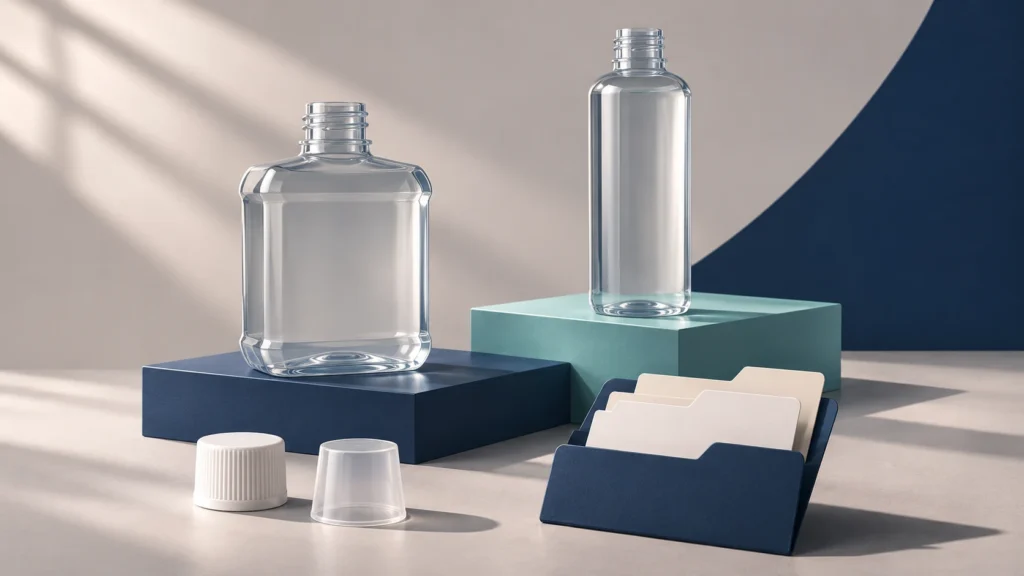
The first RFQ should specify the intended pack format without pretending every component has already been validated. For mouthwash, this may include bottle format, closure and label/sleeve direction. For toothpaste, it may include tube, cap and carton requirements. For breath spray, identify the intended container and sales format.
If you already selected a component supplier, state that the component is customer-supplied and needs production compatibility review.
Provide first-order units per SKU and, if available, the repeat-order forecast. ORALABX’s standard commercial MOQ is 10,000 units/SKU for bottles, sprays and tubes. Single-dose sachets have a standard MOQ of 100,000 sachets/SKU. Final order quantities depend on the confirmed formula, packaging specification and component minimums. This helps the manufacturer understand whether the packaging and production assumptions fit the project.
If the first order is a controlled market-entry run, state the confirmed launch channel, expected first-order volume and repeat-order assumptions. If you expect a retail rollout, provide the expected range rather than asking the supplier to quote an undefined “bulk” order. Volume information also helps identify whether several SKUs should be launched together or phased.
Ask for the project-specific document list rather than writing “all certificates.” Depending on the product and agreed scope, this can include product specifications, ingredient information, batch records, COA or SDS where applicable, and packaging or label information. Confirm availability, permitted disclosure, cost and delivery stage for each item. Certificates, registrations and destination-market files are not automatically included in every project.
Use the ORALABX resource center to align document questions with the relevant manufacturing and market-entry topics. Final local compliance responsibilities should still be confirmed with the appropriate responsible parties.
State the desired launch date, but also describe what is already approved. A realistic timeline depends on whether formula direction, packaging, artwork and internal decision-makers are ready.
For an existing formula route, initial samples usually take 5–7 working days after the formula scope is confirmed. First-order mass production usually takes 45–60 days after the formula, packaging, artwork and deposit are confirmed; shipping is additional. Custom development, further testing and special packaging require a separate schedule. If the launch date is fixed, identify the latest acceptable milestones for sample approval, artwork lock and commercial production. This makes schedule risks visible early.
| RFQ Field | What to Include | Why the Manufacturer Needs It |
|---|---|---|
| Company and channel | Brand/importer/distributor; retail, e-commerce, pharmacy or other channel | Provides commercial context |
| Product | Category, SKU count and positioning | Identifies manufacturing scope |
| Target market | Launch countries/regions | Frames documentation and product review |
| Manufacturing model | Private label, custom OEM or contract manufacturing | Defines development route |
| Formula status | Existing base, development brief or buyer-owned specification | Defines technical work required |
| Packaging | Container/tube, closure, decoration, carton and supplied components | Frames sourcing and compatibility review |
| Volume | First-order units per SKU and repeat-order assumptions; standard MOQ 10,000 units/SKU, or 100,000/SKU for single-dose sachets | Supports MOQ and production planning |
| Documents | Agreed product, batch and market-support documents, where applicable; document owner, cost and delivery stage | Clarifies responsibilities |
| Timing | Launch date, formula-scope confirmation, approval owners and shipping allowance | Tests schedule feasibility |
Product brief or current specification.
Reference packaging images or component drawings, if available.
Artwork or label draft, if it already exists.
Reference product information for sensory direction, without requesting IP copying.
List of target claims that still need review.
Required-document list from the buyer’s regulatory or quality team.
Only attach what is current. Outdated drawings and conflicting formula versions create more risk than missing files.
Build a comparison table using the same categories for every response: formula/development scope, packaging assumptions, MOQ, unit-price basis, one-time costs, sample/revision scope, expected documents, lead-time assumptions and terms. Mark every item that is still “to be confirmed.”
This prevents a superficially lower quote from winning simply because important services or components were excluded.
Requesting a quote without stating the target market.
Using “OEM,” “private label” and “contract manufacturing” as if they always mean the same project.
Comparing quotes based on different packaging assumptions.
Hiding the expected volume until after a price is provided.
Asking for regulated claims without stating who will validate the claim and market pathway.
Finalizing artwork before product information and packaging specifications are stable.
Requesting “all documents” without identifying what the importer or quality team actually needs.
At minimum, provide the product category, target market and channel, manufacturing model, formula status, packaging direction, first-order units per SKU, timing and any known documentation requirements.
A target can be useful if it is realistic and clearly tied to a defined formula, pack and volume. It should not replace the technical and commercial details needed to build the quotation.
A high-level sourcing brief can cover several categories, but each product should have its own formula, packaging, volume and target-market requirements so the manufacturer can review them separately.
State that you need formulation support and provide the desired product positioning, ingredient preferences, claims direction, sensory target, market and commercial constraints.
Responsibilities vary by market and project. The RFQ should explicitly state what manufacturing-side documentation is expected and which local regulatory roles remain with the brand, importer, distributor or appointed responsible party.
A strong RFQ does not need to answer every technical question. It needs to expose the assumptions that drive price, feasibility and timing. When your product, market, packaging and volume inputs are clear, manufacturers can respond with fewer hidden differences. If you are ready to review an oral care project, submit the brief through the ORALABX project inquiry with your product category, target market, expected volume and launch requirements.
Share your product type, target market, estimated volume and launch timeline. We will review the project scope and recommend the appropriate development path.
Best suited to brands, importers and distributors planning scalable commercial production.
Share your formula, claims, packaging and target market for a practical OEM project assessment.