
Compliance

17 min read
June 28, 2026
Compliance
17 min read
June 28, 2026
In This Article
Many brands planning to sell mouthwash in the United States assume they need FDA approval or FDA registration before launching. In reality, the answer depends on how the product is classified and what claims it makes.
In this article, we explain the difference between cosmetic and OTC drug mouthwash, how FDA registration differs from FDA approval, and what manufacturers and brand owners need to know before entering the US market.
We will cover the specific impact of MoCRA on cosmetic formulas, the strict framework governing over-the-counter drugs, and what documentation you must secure from your manufacturing partner to ensure your product safely reaches the shelves.
Note: Regulatory requirements must be verified on the official FDA website as classifications and compliance rules may change.
Not automatically, no. What you need depends on whether your product is classified as a cosmetic or an over-the-counter drug.
Those two categories follow completely different regulatory frameworks, and the claims your product makes are what determines which one applies to you.
A mouthwash that freshens breath sits in a very different regulatory space from one that claims to prevent cavities or treat gingivitis. They may look like similar products on the shelf, but from a compliance standpoint, they are not the same thing at all.
It is also important to understand that FDA registration and FDA approval are not the same thing. Many brands planning a US mouthwash launch use those terms as if they mean the same thing, but they describe two completely different processes with different implications for your product.
Registration is an administrative step that identifies your facility or product to the FDA. Approval is a separate, more involved process that applies in specific drug development contexts.
Understanding which one applies to your product starts with understanding your classification, and that is what the rest of this article breaks down.
Although active ingredients are important, the FDA primarily determines classification based on the product’s intended use and marketing claims. The FDA looks closely at what a product claims to do to make its determination.
If your product performs a purely cosmetic function and stays within these types of claims, it is regulated as a cosmetic:
These claims describe a cosmetic effect. They are not suggesting the product treats or prevents any medical condition, which is what keeps them clearly on the cosmetic side of the line.
If your mouthwash crosses into therapeutic territory, it is regulated under a stricter drug framework. Examples include:
That one decision changes the entire regulatory framework your product has to comply with, which is exactly why your claims need to be defined and confirmed before formulation begins.
The confusion usually starts with the language. Registration sounds like an official review process, while approval sounds like a mandatory gate every product must pass through. Neither assumption is accurate for standard oral care.
According to official the FDA’s cosmetic and drug classification guidance, the core distinction boils down to this:
Understanding FDA registration vs FDA approval mouthwash distinctions prevents a major compliance trap. A facility can be fully registered and still produce an illegal product if that product makes drug-level claims without meeting OTC drug manufacturing standards.
Registration does not validate your claims or review your formula. Classification sets the rules, and those rules dictate your next steps.
If your mouthwash is classified as a cosmetic, the primary framework shaping your obligations is the Modernization of Cosmetics Regulation Act of 2022, known as MoCRA. Before MoCRA, cosmetic regulation in the US was comparatively light.
MoCRA changed that significantly by introducing formal registration and product listing requirements and expanding the FDA’s oversight authority over cosmetic products sold in the US market.
Under the cosmetic pathway, here is what applies to your product and your manufacturing partner:
One thing worth being clear about here is that cosmetics are not FDA approved, but they are FDA regulated. That distinction matters when you are talking to retailers, distributors, or any downstream partner about your product’s compliance status.
MoCRA registration is a legal compliance requirement, not a quality endorsement, and representing it as anything more than that creates problems further down the line.
If your product makes therapeutic claims or contains active ingredients that move it into drug territory, the OTC drug pathway applies, and the requirements are considerably more involved than those on the cosmetic side.
The gap between cosmetic compliance and OTC drug compliance is significant, and it affects your formula, your manufacturer, your label, and your production process.
Here is what the OTC drug pathway covers:
The FDA’s OTC drug review process and the OTC nonprescription drug regulatory framework set out these requirements in full.
If your product is going to carry a cavity prevention or anti-gingivitis claim, your manufacturer needs to be registered as a drug establishment, operating under drug GMP standards, and set up to produce Drug Facts compliant labeling.
A facility that is only registered under MoCRA as a cosmetic manufacturer is not sufficient for an OTC drug product.
Here is a quick reference to help you work out where your product sits before development begins.
| Product Claim | Typical Active Ingredient Situation | Likely Classification |
| Fresh breath | Cosmetic ingredients | Cosmetic |
| Cosmetic oral care claims | Cosmetic ingredients | Cosmetic |
| Anti-plaque | Therapeutic actives | OTC Drug |
| Anti-gingivitis | Therapeutic actives | OTC Drug |
| Cavity prevention | Therapeutic actives | OTC Drug |
Working this out after the formula is already built means reworking decisions that cost real time and money to reverse. The FDA guidance on cosmetic and drug classification is where you verify where your specific product sits before committing to a formulation direction.
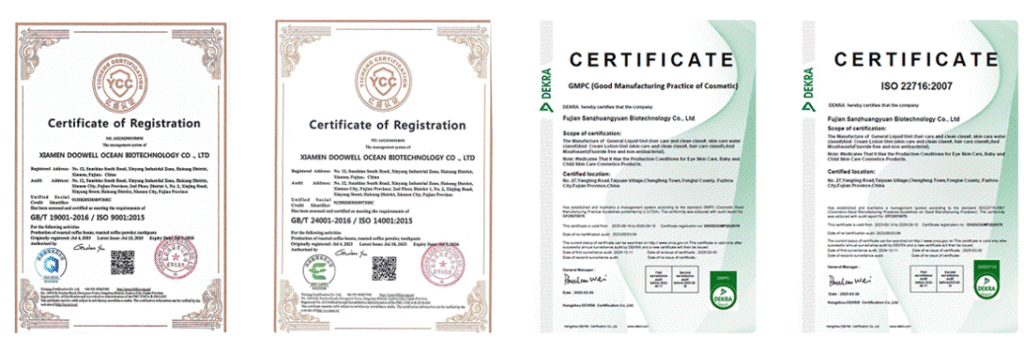
Your manufacturer is an important part of your compliance setup, but the role they play is specific, and it is worth being clear about where it starts and where it ends. Compliance is a shared responsibility between the manufacturer and the brand owner, and neither party can substitute for the other. For brands entering the US market, choosing a qualified mouthwash contract manufacturer helps ensure facility documentation, GMP alignment, batch records, and labeling support are reviewed before production begins.
A qualified oral care manufacturer should be able to provide the following:
What a manufacturer cannot do is determine your regulatory obligations for you. A production partner who knows their business will be transparent about what their facility is qualified to produce and what documentation they can supply.
Running a thorough manufacturer evaluation before committing to a production partner is one of the most practical ways to make sure the compliance foundation of your project is solid before production begins.
Note: Regulatory requirements may vary depending on product claims, active ingredients, and target market. Final compliance requirements should always be confirmed with qualified regulatory professionals.
Classification is not something to figure out once the formula is already done. It shapes every other decision in your development process, and leaving it until late in the project tends to be expensive. Brands that work with a full custom mouthwash formulation supplier early in the planning stage can better align claims, active ingredients, formula direction, and packaging requirements before development costs are locked in.
Here is what classification affects before production even begins:
Sorting this out before your mouthwash production costs are locked in keeps your project on a timeline that actually holds, and keeps your budget built around the right set of requirements from the start.
No. Registration is an administrative step that identifies a facility or product to the FDA. Approval is a separate process that applies in specific drug development contexts and does not apply to most mouthwash products.
Most mouthwash products are not FDA approved the way prescription drugs are. OTC drug mouthwash must comply with the relevant OTC monograph framework, but that is a compliance requirement, not an approval process in the traditional sense.
Yes. Under MoCRA, facilities that manufacture or process cosmetic products sold in the US are required to register with the FDA and list their products. This applies to cosmetic oral care products including mouthwash.
You can request facility registration documentation directly from your manufacturer. For drug establishment registration, the FDA maintains a publicly searchable database where you can check registration status independently.
The claims it makes and the active ingredients it contains. A mouthwash claiming to prevent cavities, reduce plaque, or treat gingivitis is making therapeutic claims that move it into OTC drug territory regardless of how the brand markets it elsewhere.
No. Registration is a compliance step, not an endorsement. It tells the FDA that a facility exists and what it produces. It does not mean the FDA has reviewed or approved the quality of that facility’s output.
Here is what is worth keeping clear as you move toward your US mouthwash launch:
And the time to work all of that out is before development begins, not after.
Note: Regulatory requirements must be verified on the official FDA website as classifications and compliance rules may change.
ORALABX supports US cosmetic oral care manufacturing only. We do not manufacture US OTC drug products, including fluoride anticavity toothpaste or therapeutic rinses. For cosmetic projects, we provide formula information, specifications, batch documentation, and other manufacturing-side records for review by the brand, importer, or appointed regulatory consultant.
If you are planning a US cosmetic mouthwash launch, our mouthwash manufacturing team can review whether the requested formula and claims fit ORALABX’s manufacturing scope before development begins.
Confirm the regulatory pathway before product development begins. If the formula or claims place the product in the US OTC drug category, the project must be handled by an appropriately registered OTC drug manufacturer.

Share your product type, target market, estimated volume and launch timeline. We will review the project scope and recommend the appropriate development path.
Best suited to brands, importers and distributors planning scalable commercial production.


