In This Article
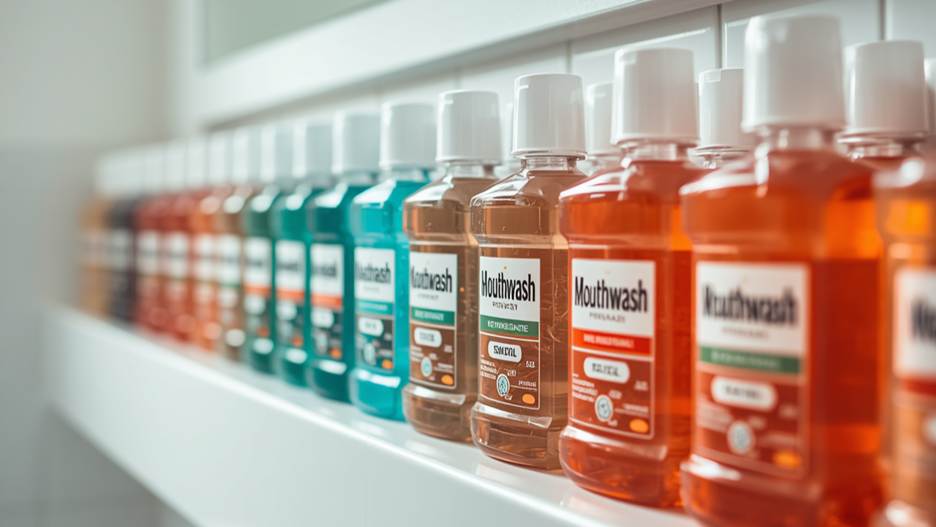
One of the first real decisions you will face when launching a mouthwash product is whether to start with an existing stock formula or invest in developing something custom.
It seems like a small technical choice on the surface, but it affects nearly everything that follows like your budget, your timeline, your MOQ, and how much room you have to make your product genuinely your own.
Both paths are common in oral care manufacturing, and both work. They just serve different goals.
This guide breaks down how manufacturers actually evaluate each option, so you can walk into that conversation already knowing what cost, lead time, and flexibility look like on both sides.
Choosing between these two paths comes down to balancing your timeline against your intellectual property goals. Below is a decision framework based on production realities to help you identify the correct path for your current stage:
A stock mouthwash formulation already exists within a manufacturer’s catalog. The development work, stability testing, and production process have already been completed, which means a brand can step into an established formula rather than building one from the ground up.
Stock formulas typically come with the following:
This route is common for new brands entering the oral care category for the first time. It gives you a real product to launch with quickly, without carrying the cost and risk of formulation development on day one.
Our private label mouthwash program runs on exactly this kind of foundation, built so brands can move quickly without cutting corners on quality.
A custom mouthwash formulation is built around a brand’s specific requirements rather than pulled from an existing catalog. This route involves real development work, starting from ingredient selection and moving through testing and refinement before the formula is finalized for production.
Custom development typically includes the following stages:
This path tends to suit established brands that already have market validation and want a formula that is genuinely their own.
| Comparison Factor | Stock Formula | Custom Formula |
| Development Timeline | Short, the formula already exists | Longer, requires development and testing |
| Upfront Investment | Lower | Higher |
| MOQ Expectations | Often lower or more flexible | Often higher due to dedicated runs |
| Formulation Flexibility | Limited to existing options | Built entirely around your needs |
| Regulatory Considerations | Already cleared through prior validation | Requires fresh review for the new formula |
| Sampling Requirements | Minimal, mostly flavor and fit confirmation | Multiple rounds are common |
| Production Complexity | Low, runs on established processes | Higher, may need process validation |
| Speed to Market | Fast | Slower, but more differentiated |
The next few sections walk through the manufacturing logic behind each row.
Cost is usually the first question, and the gap comes down to how much work has already been done before your project even starts.
With a stock formula, the ingredients are already in our inventory or on standing order with our suppliers.
The formulation ratios are already locked. There is no lab time spent testing combinations, no stability trial runs, no waiting on raw material samples to come in for evaluation. We pull the existing formula, confirm the batch is consistent with prior runs, and move straight into production.
Because the same base formula is often used across multiple brands, the cost of having developed it in the first place is already spread across many projects, not carried by yours alone.
A custom formula starts from a blank sheet, and every step adds its own cost:
None of that is wasted money, though. That targeted investment is exactly what buys you an exclusive, high-performance formula that belongs entirely to your brand.
To understand the actual labor that goes into a custom project, you can see how each phase connects by checking out our manufacturing workflow.
Timeline differences follow a similar logic, but the weeks add up based on physical processing stages in the lab rather than component costs.
With a stock formula, production moves rapidly because you bypass the initial chemical R&D cycle entirely. The compounding parameters, such as precise mixing speeds, high-shear homogenization rates, and heating/cooling cycles inside the jacketed tanks, are already engineered and pre-programmed into the factory’s automated systems.
Because there is zero trial and error and the raw materials are already kept in active inventory, the factory can skip component sourcing and slot the recipe straight into the active production calendar.
For a custom formula, the sequence looks different because it introduces unproven chemical interactions that require a linear, multi-week validation process before mass production can even begin:
ORALABX coordinates formula development, packaging compatibility review and commercial production planning within the agreed technical scope. Production timing is confirmed after formula, packaging, artwork and deposit approval.
Your formulation choice has a direct, practical impact on the Minimum Order Quantity (MOQ) a manufacturer can offer. This floor is entirely governed by the physical volume requirements of industrial mixing equipment and the manual labor involved in line changeovers.
At ORALABX, stock or lightly modified mouthwash formulas typically start around 10,000 bottles, while travel sachets and single-use cups typically start around 100,000 units. This baseline helps anchor production expectations before diving into factory constraints.
Stock formulas offer far more flexibility because the manufacturer already buys the core ingredients in bulk. Because the recipe is a standard base, the factory can compound a single massive batch of the liquid and split it across multiple private label clients, customizing only the surface-level flavor or packaging on the filling line.
This shared volume spreads mechanical setup costs across a commercial production run, improving unit economics and repeat-order continuity.
Custom projects require a much larger inventory commitment because they cannot share a run with anyone else. Their MOQs run higher due to three physical factory constraints:
To give you a practical sense of the numbers, a standard mouthwash or toothpaste run for a stock or lightly modified formula typically starts around 10,000 bottles or tubes. If you opt for travel sachets or single-use cups, the requirement is typically around 100,000 units due to the high-speed nature of the packaging machinery.
At ORALABX, standard mouthwash production starts at 10,000 units per SKU. Packaging format, component print runs and formula requirements are reviewed against the confirmed commercial order before production planning begins.
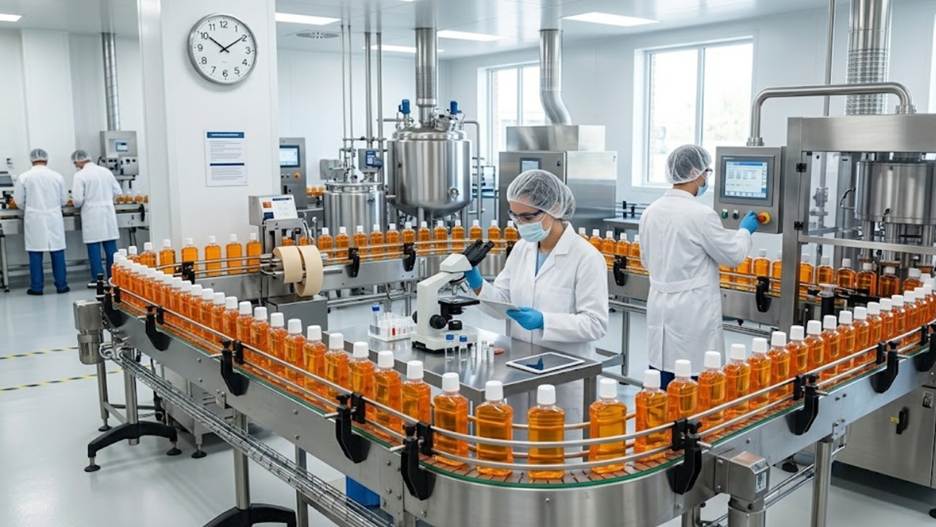
Before choosing between stock and custom, it helps to get honest about how much flexibility your brand actually needs right now. Not every brand needs a fully custom formula to succeed, and not every brand can keep growing on a stock one either.
To figure out which path matches your business goals, think through these specific areas:
Greater customization almost always means more development work, more testing, and more validation before the formula is ready for production. That is not a downside, it is simply the tradeoff for building something distinct instead of starting from an existing base.
There is no universal right answer here, but there is a way to think it through based on where your brand actually stands today.
A stock formula may be the better choice if:
A custom formula may be the better choice if:
Most brands land on the right answer by being honest about which list actually matches where they are now, not where they hope to be a year from now.
To make the right choice, it helps to look at where your business actually stands in its growth cycle. We see brands approach us at completely different stages. Some need to preserve capital and test the waters, while others have outgrown standard options and require dedicated engineering.
You can identify exactly which stage matches your current operation:
When a brand is entering the oral care space for the first time, the primary goal is usually validating demand without tying up massive amounts of capital in inventory. For these projects, we almost always recommend a stock formula.
Choosing a pre-validated formula minimizes upfront R&D costs and keeps order volumes manageable. It allows a brand to launch rapidly, establish its distribution channels, and figure out what its customers actually want before paying for custom chemical engineering.
A brand that has already proven demand with a stock formula often moves toward custom development for its next product. We often work with brands that have already built a steady, profitable stream of mouthwash sales using a standard formula. Once they have consistent data and predictable monthly volumes, their needs change.
At this stage, reinvesting in custom development makes sense. They use their market data to refine the taste, add specific functional ingredients their customers are asking for, and transition to a proprietary formula that increases their long-term business valuation.
Sometimes a brand approaches us with a product concept that simply cannot be built using standard inventory. This includes clinical rinses requiring specific active ingredient percentages, or eco-conscious brands demanding a strict, sulfate-free botanical base.
Because stock formulas are engineered for broad market appeal, these specialized projects must go down the custom route from day one to handle the specific compounding requirements and specialized raw material sourcing.
At ORALABX, we routinely manage these advanced chemical complexities, proving our versatility as a high-performance manufacturer.
A clear example of this is our innovation mouthwash OEM case study, where we partnered with a US technology firm to engineer a highly specialized, proprietary functional formula from scratch.
Stock-base and custom-development projects are reviewed against formulation complexity, packaging requirements, test scope and commercial order volume before the production plan is agreed.
No. Stock formulas go through the same stability and safety testing as custom ones. The difference is not quality, it is how much the formula is built around your specific brand versus an existing proven base.
Yes, within limits. Most stock formulas allow flavor selection and some light adjustment, but deeper changes to active ingredients usually move the project into custom territory.
It varies with complexity, but custom development generally takes longer than stock sampling since formulation work has to happen before any samples can be produced.
Not always, but it is common. Custom formulas often need a dedicated production run, which tends to push MOQ higher than what is available for an existing stock formula.
Stock formulas tend to be the more practical starting point, since they reduce both cost and timeline risk while you are still validating demand in the market.
As early as possible. Talking through stock versus custom before you finalize your business plan helps align your budget and timeline with what is actually achievable for your launch.
Neither stock nor custom is universally better. The right path depends on your launch goals, your budget, your timeline, and how much differentiation your brand actually needs right now.
What matters most is working with a mouthwash manufacturer who will walk you through both options honestly instead of pushing you toward whichever one is easiest for them.
At ORALABX, we support brands through stock formula launches and full custom development alike, and we help you figure out which one actually fits before you commit budget or production time to either direction.
Tell us where your brand is right now, and we will help you map out the path that makes sense from here. Get in touch with our team and let’s talk through your project.
Many commercially realistic mouthwash projects do not begin from a blank sheet and do not use an unchanged stock formula. They begin with a mature manufacturing base and a clearly defined benchmark. The development work then focuses on the differences that matter commercially: flavor, sweetness, cooling profile, appearance, selected active system, fill volume, and packaging presentation.
This benchmark-led route can reduce unnecessary formulation risk while still creating a product that fits the brand brief. It is appropriate when the buyer can define the target market, intended cosmetic claims, benchmark product, order volume, and the characteristics that must be matched or deliberately changed.
ORALABX does not position this route as formula copying. The goal is a producible specification built from an established base and verified against the agreed commercial brief. See the custom mouthwash formulation process.

Share your product type, target market, estimated volume and launch timeline. We will review the project scope and recommend the appropriate development path.
Best suited to brands, importers and distributors planning scalable commercial production.