OEM & Manufacturing

17 min read
February 04, 2026
Home > Blog > OEM & Manufacturing > MOQ Strategy: How Brands Reduce First-Order Risk When Launching Oral-Care Products
OEM & Manufacturing
17 min read
February 04, 2026

Image Source: iStock
Big first orders for minimum order quantity oral care tie up your money in stock before you know if people will buy it. Say you order 10,000 units, hoping for quick sales. But 4,000 sit unsold and go bad, costing you storage and lost cash for ads.
A good oral care MOQ strategy matches factory rules with what you can afford to risk. Factories need private label oral care MOQ limits because setups take 2-4 hours, suppliers have their own minimums, and packaging doesn’t always fit liquid batches.
Smart brands check packaging MOQ comparison to split liquid making from packaging. This cuts your first-order risk significantly which is great for sachet packet mouthwash.
This guide gives numerous examples, packaging MOQ comparison charts, and plans to handle oral care manufacturing costs correctly. Use it for bottles, sprays, or sachets to grow your business, not sink it.
In This Article
MOQs reflect the fixed costs and operational constraints that govern batch production economics.
Oral care manufacturing costs are quite high regardless of batch size, projected to reach $76.03 billion in 2029. Switching products takes 2–4 hours for flushing, cleaning, refilling, test runs, and quality checks, adding $0.75–$1.50/unit for 2,000 bottles, $0.15–$0.30/unit for 10,000. Microbial testing further raises small-batch costs.
OEM production economics face limits from suppliers. Liquids batch in 100 L minimums, packaging in 3,000–5,000 bottles or 10,000–20,000 sachets, and labels 5,000+. Ingredients like CPC or hydroxyapatite require 5–25 kg minimums. OEM minimums ensure orders match supplier and production economics.
MOQs usually follow a tiered structure, and knowing your tier affects cost, timelines, and risk.
Used to test formulas, packaging, and market fit with minimal commitment. Costs are highest ($2.00–$3.50/unit), setup fees aren’t spread out, and flexibility is high. Watch for pressure to order more without a clear path to lower pricing.
This stage confirms demand and reorder potential. Pricing improves ($1.50–$2.00/unit), compliance testing is complete, and payment terms may be flexible. Red flags include small price drops or unclear reorder terms.
Designed for growth and efficiency. You get the lowest unit costs, better payment terms, and supply chain priority—but take on inventory risk.
The Tier Trap
Some manufacturers keep brands stuck at high pilot pricing. Always ask how pricing and MOQs change as you scale.
Packaging MOQ comparison reveals significant variance across formats, with some enabling lower-risk market entry than others.
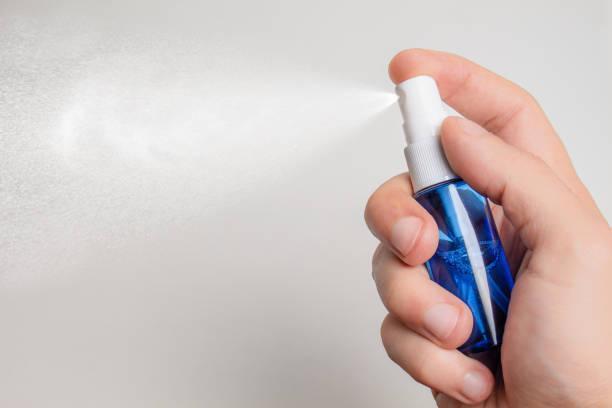
Image Source: iStock
| Packaging Format | Typical MOQ | Main Cost Driver | First-Order Risk |
| Bottles (250–500 ml) | 3,000–5,000 | Bottle tooling, labels, case sizes | Medium–High |
| Bottles (100 ml) | 5,000–8,000 | Higher bottle cost, fill efficiency | Medium |
| Sprays (15–30 ml) | 5,000–10,000 | Valve parts, assembly work | High |
| Sachet Packet Mouthwash (10–12 ml) | 10,000–20,000 | Film minimums, low liquid use | Low–Medium |
| Tubes (100–150 g) | 5,000–8,000 | Tube making, filling setup | Medium |
The counterintuitive finding: Sachets’ high MOQs (10,000-20,000 units) seem large but equal just 100-240 liters. A 5,000-bottle (250ml) order needs 1,250 liters—5- 10x more liquid. Sachets suit capital-conscious launches.
When a manufacturer advertises “No MOQ” or very small starting runs, it often sounds startup-friendly. But the trade-offs can be costly.
Higher Unit Costs
Low MOQs spread costs across fewer units. This pushes per-unit pricing so high that wholesale or retail margins become unworkable.
Generic Packaging
To keep quantities low, manufacturers rely on stock packaging. Your product looks like dozens of others, killing differentiation and any premium positioning.
Testing Shortcuts
Stability and compliance testing is often skipped. Products may separate, discolor, or lose efficacy within months, leading to complaints and unsellable stock.
Reorder Surprises
Reorder minimums, pricing, and lead times often increase once you’re dependent on the supplier.
Quality Drift
Ingredient substitutions between batches can change texture, color, or taste—customers notice immediately.
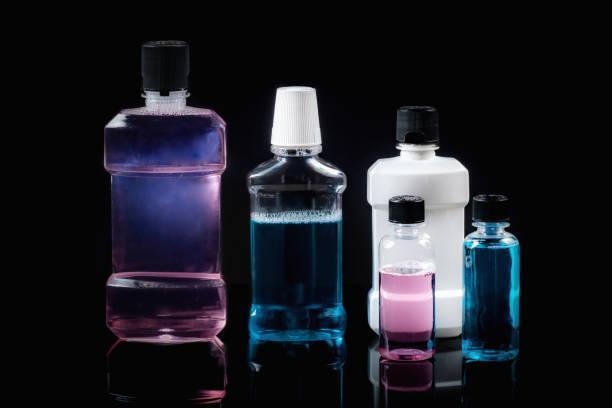
Image Source: iStock
Real numbers clarify how MOQ decisions affect cash flow, storage, and reorder timing.
| Feature | Scenario A — 2,000 Units | Scenario B — 10,000 Units |
| Format | 250 ml bottles, alcohol-free | 250 ml bottles, alcohol-free |
| Unit Cost | $1.85/unit | $1.35/unit |
| Total Outlay | $4,500 (product + freight) | $15,300 (product + freight) |
| Inventory Duration | 150 units/month → 13 months; 5 months before expiry | 150 units/month → 5+ years; even 400 units/month exceeds shelf life |
| Pros | Low cash lockup, fast demand test, easy formula/packaging changes | Lower unit cost, better margins for promos/wholesale |
| Cons | Higher per-unit cost, risk of stockout | $10,800 capital tied up, storage fees, 4,000–5,000 units may expire |
| Revenue / Profit | $11,000–15,000 revenue; $6,500–10,500 gross profit | Savings offset by expiry and carrying costs |
| Key Insight | Reduces risk, preserves cash, allows testing new SKUs | Overcommitment risks write-offs, tied-up capital, and discounting |
OEM MOQ negotiation works best when brands know which parts can flex and which can’t.
Use a layered MOQ strategy to spread orders over time. This avoids big risks from one huge batch.
Layered MOQ Strategy Steps:
Tiered Deals: Some OEMs let you promise 20,000 units over 12 months, ordering in 5,000-unit chunks as stock hits eight weeks’ supply.
Don’t treat private label oral care MOQ as one number. Split liquid, bottles, and labels for wiggle room.
Example:
Old way: Order 5,000 bottles (1,250 liters liquid). Waste 750 liters.
Smart way: Order 500 liters (fills 2,000 bottles now). OEM holds extra bottles/labels. Pay for bottles upfront, but filling only when ready. Limits liquid waste.
Or: Order 5,000 bottles, split liquid into two flavors. Meets MOQ, spreads sales risk.
Image Source: Freepik
Use this framework to structure conversations that balance OEM constraints with financial risk management.
| Component | OEM Standard | Negotiation Question | Flexibility Opportunity |
| Liquid MOQ | 500–1,000 liters | Can you split across flavors? | Pool multiple SKUs from one base formula |
| Packaging MOQ | 3,000–5,000 units | Can I commit now and fill later? | Stage filling with inventory held |
| Flavor Rules | Often restricted | Same base, different oils? | Lower MOQ per flavor variant |
| Raw Materials | OEM usually owns | Can I buy ingredients separately? | Direct purchase of specialty actives |
| Shelf-Life Window | 18–24 months | What sales pace is realistic? | Conservative forecasting |
| Reorder Pricing | Volume-based | When does pricing drop? | Clear path from pilot to scale pricing |
| Label Inventory | Case minimums | Can you store unused labels? | Commit to labels, pace filling |
| Payment Terms | 50/50 or Net 30 | Can payments follow milestones? | 30% deposit / 40% production / 30% delivery |
Brands that prepare this checklist before talking to OEMs show they understand how production works. This often leads OEMs to be more flexible than with buyers who treat MOQs as simple bargaining tools.
Oral care first-order forecasting should use conservative cash management.
First production run planning benefits from modeling three demand paths with different MOQ implications:
Conservative Scenario (40th percentile outcome):
Base-Case Scenario (60th percentile outcome):
Growth Scenario (80th percentile outcome):
MOQ alignment logic:
Order 2,000–2,500 units if planning for a conservative case. This covers the worst case with a buffer and allows a reorder in months 8–10.
Order 4,000–5,000 units if the base case drives planning. This prevents stockouts during growth while keeping shelf life safe.
Avoid setting MOQs based only on high growth. Protect the downside first unless cash and marketing support the risk.
CFO planning oral care models how inventory timing impacts business cash.
Example: $15,000 cash for launch.
Option B saves $6,300 for marketing or buffers. Higher per-unit cost ($0.15 more) buys flexibility.
Use payment terms like Net 30 or 60 days. This delays cash out 1-2 months. Add pre-sales to cut upfront needs by 40-60%.
Reorder plan: Order for 6-8 months using conservative forecasts. Watch sales for 90 days. Reorder at months 4-5 if sales hit base case, funded by revenue. This boosts cash speed and cuts waste risk.
Image source: iStock
A hotel amenity supplier tested five mouthwash flavors but avoided ordering 25,000 units upfront at standard MOQs.
The manufacturer used one neutral, alcohol-free base for all flavors, adding only a different essential oil or extract to each.
Production structure:
Packaging approach:
This met minimums and spread risk across tests.
Results after 9 months:
Only 700 units wasted vs. 6,000-8,000 if picking wrong flavors. Winners scaled fast. They kept cash flexible.
Learning: Shared base formula lets brands test variants without big MOQ risks. Use ingredient commonality!
Packaging MOQ comparison shows that format selection impacts both unit economics and capital exposure in non-obvious ways.
Bottles (250-500ml):
Sprays (15-30ml):
Sachet Packet Mouthwash (10-12ml):
Key finding: Sachets have the highest unit MOQs but use the least liquid, often costing the least overall. Focusing only on units can hide true financial and inventory risks.
Oral care manufacturing costs sometimes need one-time investments that change MOQ plans beyond per-unit prices.
Chasing low MOQs can damage your business. Small runs often force generic packaging, weak premium positioning, higher unit costs, and frequent stockouts, especially in retail. They also inflate costs when using expensive actives or testing too many SKUs at once. Meanwhile, competitors ordering at scale gain pricing and marketing advantages. In many cases, a higher MOQ protects margins, brand perception, and long-term competitiveness.
Oral care MOQ strategy balances OEM production realities with smart financial planning, not confrontational negotiation.
Strong MOQ approaches include:
The goal aligns commitments with capacity and growth.
Model MOQ scenarios with inputs for unit cost, storage duration, shelf-life limits, and reorder timing. See total cash outlay, monthly carrying costs, breakeven timing, and write-off exposure. Download the MOQ Price Calculator to test your scenarios before production.
Discuss packaging, MOQ tiers, shelf-life risks, and OEM constraints. Review finances and operations to match your first order with capital, demand, and scaling. Book MOQ Strategy Call before supplier commitments.
Bottles need 3,000–5,000 units, sprays 5,000–10,000, sachets 10,000–20,000 pieces, and tubes 5,000–8,000. Sachets use far less liquid than bottles, so volume matters more than unit count.
OEMs usually own ingredients. If orders drop below minimums, they may store materials for a fee or require purchase. Always confirm ownership early.
MOQs must match sales speed. With an 18-month shelf life and a 5,000-unit MOQ, you need to sell about 400 units per month. Slow sales increase write-off risk.
Often yes. Liquid can be shared across flavors, but packaging is per SKU.
Yes. Sachet packet mouthwash uses far less liquid, cutting costs by 40–60%.
Usually. Repeat orders often reduce MOQs by 20–30%.
Schedule a consultation to discuss your industry needs, volume requirements, and custom formulation options.
Trusted by 200+ brands across hospitality, retail, and travel sectors