OEM & Manufacturing

18 min read
February 04, 2026
OEM & Manufacturing
18 min read
February 04, 2026
Source: Pexels
Most buyers enter OEM mouthwash formulation expecting a straightforward handoff: send specs, receive samples, approve production. The reality involves more decision points. Formula adjustments based on stability results. Trade-offs between ingredient cost and shelf-life performance. Packaging compatibility tests and IP negotiations that determine long-term supplier flexibility.
Understanding how private label mouthwash manufacturing actually progresses helps brands avoid revision loops, budget surprises, and launch delays. The mouthwash OEM process isn’t opaque, but it does require alignment on formulation priorities, regulatory scope, and cost thresholds before lab work begins.
This guide walks through the structured workflow that oral care OEM manufacturers use to translate buyer requirements into compliant, scalable formulas.
In This Article
OEM mouthwash formulation follows a six-stage progression that balances technical feasibility with commercial viability. Each stage introduces new costs and time commitments, so buyers typically validate assumptions at earlier checkpoints before advancing.
OEM 6-Step Workflow:
Buyers progress sequentially through stages, though some OEMs allow parallel work with proven formulas. Costs, time, and risk spike after pilot—lock formulations first. Custom needs more lab time; minor house formula tweaks skip trials. Know your customization level for timelines.
Source: Pexels
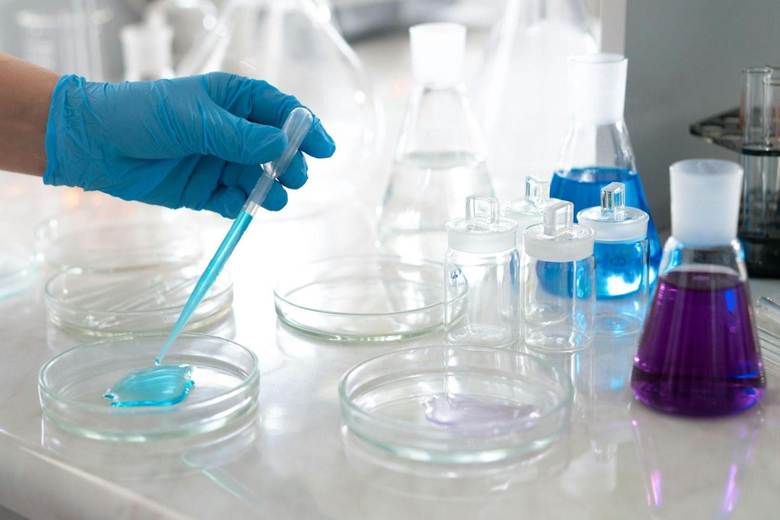
Many OEM mouthwash sample projects start inefficiently because buyers submit briefs without sensory reference points.
Vague flavor descriptions like “fresh mint, not too strong” confuse chemists. One lab interprets that as cooling menthol intensity. Another reads it as mild spearmint sweetness.
Sample kits solve this alignment problem. OEMs send 3–5 reference formulas covering a range of flavor intensities, burn levels, sweetness profiles, and mouthfeel characteristics. Buyers rinse, compare, and identify which sample comes closest to their target profile.
Without reference samples, buyers approve lab mouthwash based on words like “fresh,” then reject it after tasting. Revisions add 2–4 weeks per cycle. Pre-brief sample kits align expectations—especially for alcohol-free’s milder feel—and cut reformulations.
Request a Mouthwash Sample Kit to establish preferences before drafting your formulation.
A complete OEM mouthwash formulation brief translates brand positioning into technical specifications that chemists can execute. They highlight:
Most mouthwash formulations target pH 5.5–7.5 to balance antimicrobial activity with enamel protection. Lower pH (4.5–5.5) suits whitening formulas but requires buffering agents to prevent enamel erosion. Higher pH (7.0–8.0) works for sensitivity products focused on reducing acidic irritation.
Oral care OEM chemists adjust pH using citric acid, sodium citrate, or phosphate buffers. The brief should specify the target pH or flag if the formula needs adjusting.
| 4.5–5.5 | Whitening | Requires enamel-safe buffers |
| 5.5–6.5 | General freshness | Balanced activity and comfort |
| 6.5–7.5 | Sensitivity/gum care | Neutral to slightly alkaline |
| 7.0–8.0 | Dry mouth/Halitosis | Supports saliva pH |
Custom mouthwash formulation centers on ingredient selection that delivers specific claims. The brief should identify:
Preservatives, sweeteners, and humectants round out the formula. Buyers focused on clean-label positioning should flag ingredients to avoid (parabens, SLS, artificial colors) in the brief.
The brief defines whether the product functions as a cosmetic or over-the-counter drug for the treatment of specific ailments like cavity prevention. This distinction shapes ingredient limits, labeling requirements, and approval timelines.
Private label mouthwash manufacturing for multiple regions requires coordinated compliance planning:
Buyers should indicate target markets in the brief so chemists select region-approved constraints early in development.
Source: Pexels
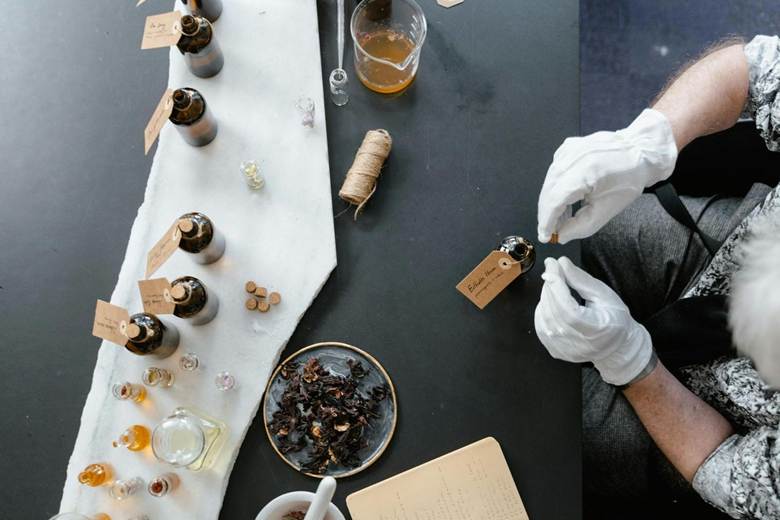
Once the brief is finalized, the mouthwash OEM process moves into lab development, where the following happens:
Lab development starts with small batches, typically 500 ml to 2 liters, mixed by hand or benchtop equipment. Chemists test ingredient solubility, pH stability, and initial sensory characteristics. OEM mouthwash formulation at this stage focuses on proving that the target profile is chemically feasible.
Buyers receive 2–3 bench samples representing slight variations in flavor intensity, sweetness level, or cooling effect. Feedback narrows the formula toward final specifications.
Flavor balance shapes user experience most in custom mouthwash formulation. Calibrate mint intensity, sweetness, cooling, and aftertaste through 4–6 iterations for approval. Color work runs parallel: natural colorants like chlorophyll need early stability tests to match synthetics.
Lab formulation services accelerate this phase by maintaining benchmarked databases that reduce trial-and-error cycles.
Approved bench formulas move into mouthwash stability testing OEM protocols that simulate months of shelf life in weeks. Stability failures at this stage trigger reformulation, delaying launch timelines by 4–8 weeks.
Oral care manufacturing stability testing evaluates three performance dimensions:
Accelerated stability testing compresses 12–24 months into 3–6 months by exposing samples to elevated temperatures (40°C) and humidity (75% RH). Real-time stability runs in parallel to validate accelerated predictions.
Formulas stable in glass vials often fail in plastic bottles, which leach compounds or let oxygen degrade actives. Private label mouthwash stability programs test with real packaging to model shelf life (18–24 months target), predicting issues like color shift or flavor loss.
Packaging compatibility testing runs concurrently with stability trials to catch issues early.
OEM development has four key decision points. After the sample kit (Week 0–1), brands decide whether to customize or adjust the base formula without major cost. At bench sample approval (Week 4–6), flavor and sensory changes are finalized. Pre-stability commitment (Week 6–8) is the practical point of no return—formula changes restart 8–12 weeks of testing. After post-stability lock (Week 16–18), only minor packaging tweaks are possible. Costs rise sharply after stability begins.
| Stage | Duration | Key Output |
| Sample Development | 2–4 weeks | Approved bench formula |
| Pilot Batch | 1–2 weeks | Scale-up feasibility confirmation |
| Stability Window | 8–12 weeks (accelerated) | Stability data and shelf-life estimate |
| Commercial Batch Readiness | 2–4 weeks post-stability | Final formula locked, production scheduled |
Source: Pexels
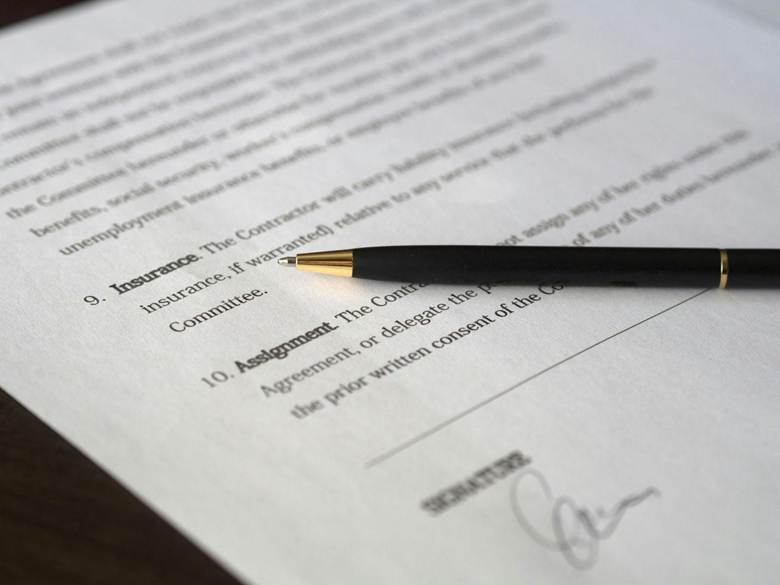
OEM mouthwash formulation IP terms determine long-term brand control and supplier flexibility. Buyers often assume they own formulas after paying development fees, but default agreements vary significantly across OEMs.
Custom-developed formulas may grant buyers exclusive use rights in specific markets, but the OEM retains the underlying formula documentation. House formulas modified for your brand typically remain OEM property with usage licenses granted to the buyer.
Custom-developed formulas often allow negotiated IP ownership, especially with higher MOQs or paid development. OEM house formulas with minor tweaks (like flavor or color) usually remain OEM property.
NDAs and Modification Limits
NDAs protect both sides: OEMs won’t share formulas, and buyers can’t reverse-engineer them. Some contracts restrict ingredient changes without approval.
Documentation Provided
Buyers typically receive specs, COAs, and SDSs (not full formulas) unless IP transfer is agreed upfront.
Scaling OEM mouthwash formulation from lab benches to commercial batches introduces variables that don’t exist at small volumes. Ingredient behavior changes and quality control become statistical rather than sensory.
Pilot batches use small-pack ingredients with higher per-unit costs. Commercial batches require bulk raw materials. Mouthwash OEM process teams negotiate supplier contracts and verify ingredient consistency across lots.
KPI Examples
Buyers should understand that MOQ is tied to tank capacity, material purchasing minimums, and economical production runs.
OEM mouthwash production uses staged mixing for even dispersion. Actives dissolve in water; oils emulsify; sweeteners blend sequentially to avoid clumping. Homogenization controls flavor and mouthfeel. Batch production sets RPM, temp, and times. QC samples check pH, viscosity, color, and flavor.
Private label mouthwash manufacturing economics depend on formulation complexity and packaging format. Also, order volume.
Mouthwash product development MOQs vary by customization level:
Sachet formats have lower MOQs than bottles due to material costs and filling line efficiency.
Oral care OEM manufacturer pricing reflects ingredient cost, labor intensity, and testing requirements:
| Formula Type | Packaging | MOQ | Cost Per Liter |
| House (alcohol-free) | 500 ml bottle | 5,000 units | $2.50–$3.50 |
| Custom flavor | 500 ml bottle | 10,000 units | $3.00–$4.50 |
| Fully custom | 10 ml sachet | 10,000 sachets | $4.00–$6.00 |
| Natural/botanical | 250 ml bottle | 10,000 units | $5.00–$7.50 |
Buyers should request itemized quotes that separate formulation, filling, packaging, and compliance costs.
Mouthwash manufacturing challenges emerge during the transition from pilot to commercial production. Experienced OEMs anticipate these issues and adjust processes before batch failures occur.
What appeared stable in the lab may separate or cloud at scale. And so, custom mouthwash formulation process adjustments include:
OEMs with in-house R&D teams iterate quietly between pilot and commercial batches to solve these problems before buyers see final products.
Oral care OEM manufacturers manage drift through:
Efficacy consistency—antimicrobial activity, whitening performance, desensitizing effect—requires active ingredient testing at batch intervals. COA documentation confirms that commercial batches match pilot performance.
Starting a mouthwash with an OEM partner looks easy. But delays and surprise costs often happen from avoidable mistakes.
Private label mouthwash manufacturing moves faster when buyers provide complete information upfront. Incomplete briefs delay lab work and increase revision costs.
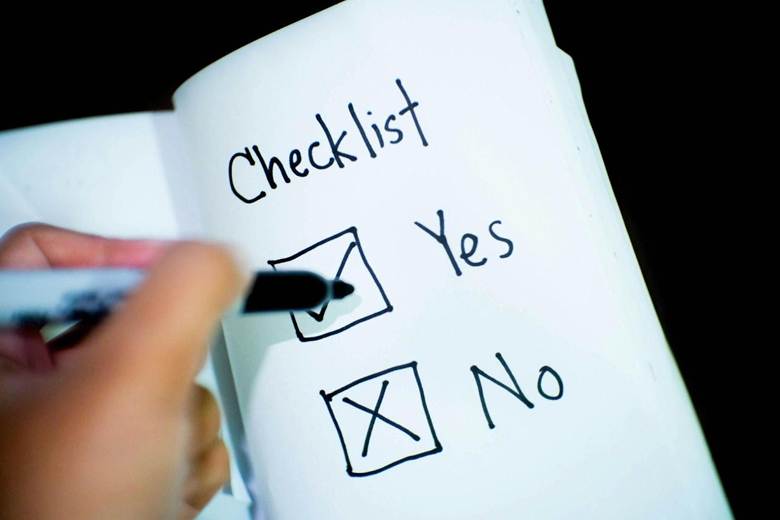
Buyer Must Prepare:
Source: Pexels
Oral care OEM manufacturer selection determines everything from formula quality to long-term production reliability. Buyers should then focus on these evaluation criteria:
Packaging services and the RFQ submission process should integrate seamlessly with formulation development to prevent delays between formula approval and production scheduling.
Accelerate lab alignment and reduce revision cycles by using a structured brief that covers all technical specifications OEM chemists need. The template includes sections for pH requirements, active ingredients, claims positioning, packaging preferences, and regulatory scope.
Download the OEM Formulation Brief Template to ensure your first submission contains complete information.
Understand how formulation choices, stability testing, packaging formats, and batch volumes affect total project cost. A detailed breakdown separates development fees, per-unit production costs, testing charges, and compliance documentation expenses.
Request a Cost Breakdown Sample to model budget scenarios before committing to development.
Schedule a consultation to discuss your industry needs, volume requirements, and custom formulation options.
Trusted by 200+ brands across hospitality, retail, and travel sectors