In This Article
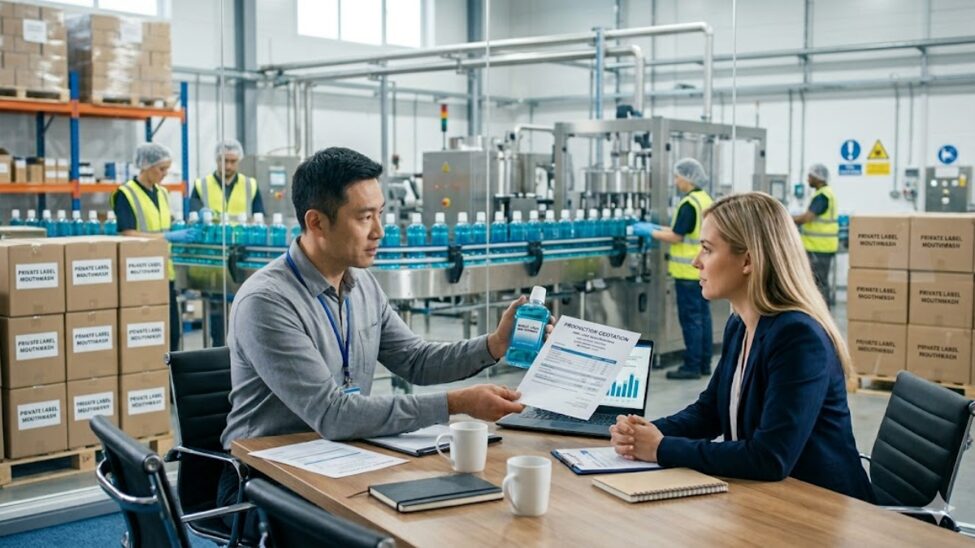
You have probably noticed that nobody leads with a fixed price in the mouthwash manufacturing industry. That is because every quotation is determined by specific formula, packaging, order volume, and target market.
Two buyers in the same product category can receive very different numbers, and both are accurate for their respective projects.
In this article, we walk you through every factor that influences private label mouthwash cost so you can build a realistic budget before your first manufacturer conversation.
We also share indicative cost ranges from our own production data, break down what drives each number, and show you how different project types compare.
Most private label mouthwash projects based on a standard 300ml bottle typically fall between USD 0.65 and 1.50 FOB per bottle at around 10,000 units. Travel sachets and cups generally range from USD 0.08 to 0.15 per unit, with MOQ requirements around 100,000 units.
| Product Format | Indicative FOB Unit Cost | Typical MOQ |
| 300ml bottled mouthwash | USD 0.65 to 1.50 per unit | Around 10,000 bottles |
| Travel sachet or cup | USD 0.08 to 0.15 per unit | Around 100,000 units |
The table above gives indicative Free On Board (FOB) cost ranges drawn from ORALABX production data. FOB means the price covers manufacturing and loading at the port of origin. Other costs like freight, import duties, and destination charges are calculated on top of that figure and vary by shipping route and destination market.
These figures are meant for budgeting purposes only, and your actual quotation from a private label mouthwash manufacturer will depend on your specific formula, packaging, and order volume.
Once you understand the major cost drivers, the variation in pricing among different private label mouthwash manufacturers starts to make a lot more sense. A handful of decisions account for most of the difference between one project’s quote and another’s.
Here is what manufacturers weigh most heavily when preparing a quotation:
Let us get into the details of each one and what it means for your budget.
Private label mouthwash runs on an existing, already-developed formula. That is what keeps the cost down and the process simple. You are selecting from a proven formula in our library, which means there is no formulation lab work, no stability testing cycle, and no development cost sitting in your quote.
Moving away from standard library formulas impacts pricing because it alters the production workflow. Standard base formulas have pre-established mixing sequences and temperatures that the factory can execute rapidly.
If a product requires specialized active ingredients, custom botanical extracts, or proprietary color matching, it complicates the process.
Complex formulations often require longer mixing times and precise multi-stage temperature control to ensure the ingredients dissolve completely and stay stable. This extended processing time means a single batch occupies the mixing equipment for a longer period, reducing daily factory output and increasing operational costs.
Within private label, you still have a few choices that can change the cost slightly:
Many buyers want major tweaks in the formula and that changes the direction entirely. A fully custom mouthwash formula, one built from scratch around specific functional claims or a unique ingredient profile, is not a private label service.
That level of development falls under OEM manufacturing, and it comes with its own cost structure entirely, since it involves fresh formulation work, multiple testing rounds, and dedicated technical resources.
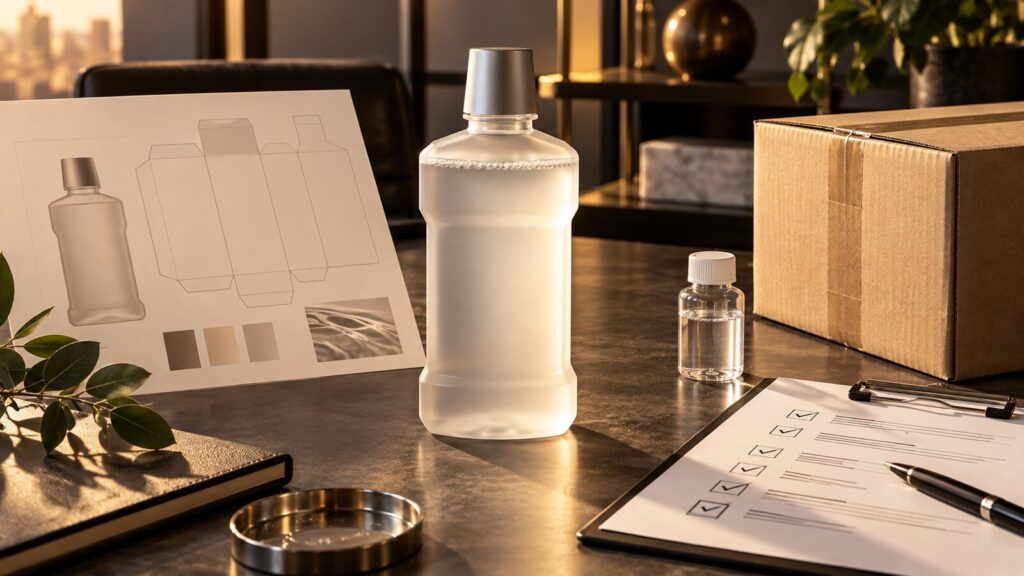
Packaging is one of the largest variables in a project because it dictates how efficiently the automated bottling line runs. Stock bottles are pre-validated to fit the factory’s standard machinery, keeping production quick and predictable.
When you introduce a custom bottle shape, it requires unique tooling and changes how the production line runs. Custom dimensions mean technicians must physically change the mechanical guides, capping components, and filling nozzles to match the new shape.
This line calibration creates machine downtime and requires test runs to prevent jams, which directly increases the manufacturing overhead built into your quote.
Other packaging variables that impact your budget include:
For a detailed explanation of how to go about this process, you can check our packaging guide at ORALABX. It covers everything you need to plan your project, from selecting bottle types and retail formats to coordinating artwork approvals and regulatory labeling.
When planning your production budget, navigating the manufacturer’s MOQ requirement is one of the most critical steps for managing your initial capital output.
The reason unit costs drop at higher volumes comes down to machine utilization versus setup labor.
Before a single drop of mouthwash is bottled, technicians must execute an intensive line-clearance and sanitization cycle on the compounding tanks and delivery lines to prevent cross-contamination.
The automated filling machines must then be mechanically calibrated for weight, volume, and seal pressure.
Because the factory expends the exact same amount of labor, water, and energy to sanitize and set up the line for a 10,000-unit run as it does for a 100,000-unit run, a smaller batch forces a lower volume of bottles to absorb that fixed mechanical downtime.
Larger runs allow the machinery to operate continuously, maximizing output per clean-down cycle and dropping the cost per unit.
A lower MOQ may reduce opening inventory, but it usually raises unit cost and limits formulation and packaging options. Commercial viability should be evaluated against total landed cost, not MOQ alone.
Beyond the initial setup labor at the factory, these factors can change the baseline MOQ:
You can read our article on mouthwash MOQ to see a detailed breakdown of how all these make up your MOQ.
When you move away from standard, off-the-shelf options to create a completely unique product, the pricing structure changes. Customizing the visual and sensory elements of your brand adds distinct identity, but it also introduces upfront development costs.
Here is how different customization decisions influence your production budget:
High levels of customization mean you are building a proprietary supply chain for your product line. When planning these unique elements, working with an experienced mouthwash manufacturer allows you to balance your creative vision with efficient, scalable production practices.
Compliance, certifications, and regional legal standards play a major role in your final manufacturing costs. Meeting these requirements ensures your product can safely enter your target market.
Here are the key regulatory factors that impact your quotation:
Our oral care regulatory compliance guide covers the sourcing and compliance considerations that most commonly affect private label mouthwash projects.
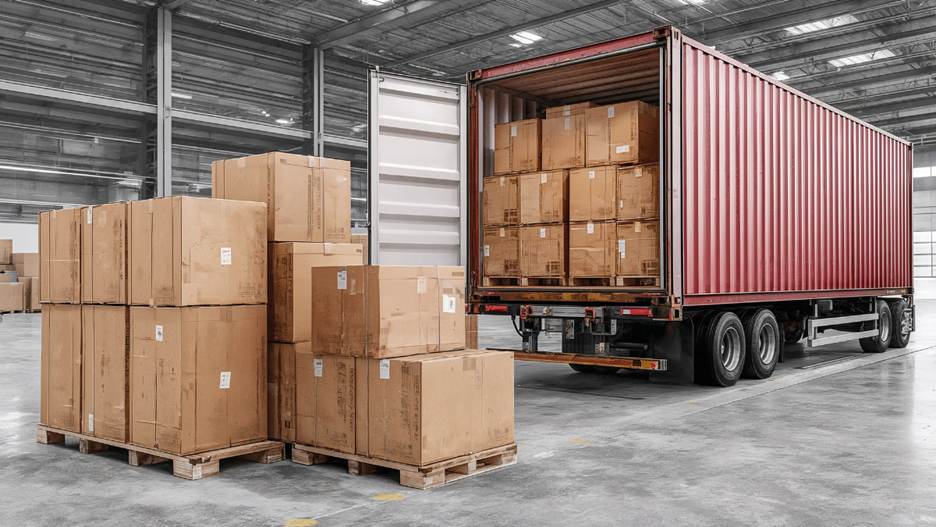
Because mouthwash is incredibly dense and heavy, shipping fees can quickly change your entire budget if they aren’t calculated early in the process.
To keep your unit economics healthy, shipping full container loads is usually the smartest path. It spreads the fixed transit fees over a larger volume, whereas partial container shipments will immediately drive up the transport cost attached to each individual bottle.
Your chosen delivery terms also change how your final invoice is structured. If you stick with the standard Free On Board terms mentioned in our pricing table, you are only paying for the production and port loading at the origin. You will need a separate budget for ocean freight, import duties, and local trucking.
Alternatively, if you ask for a delivery setup where the factory manages the transit directly to your door, those customs clearances and freight fees are calculated upfront and bundled into your manufacturing quote.
International transit also demands rugged packaging to protect your investment. Secure shrink-wrapping, heavy-duty outer cartons, and specialized palletization are mandatory to handle the shifting and moisture changes during a long voyage.
We have run projects across all three formats below. The budget planning for each one is different, and the format you choose determines the entire cost structure of your project.
A standard retail project typically involves a 300ml bottle, a stock formulation, a standard closure, and a silk-printed label. At an opening order of around 10,000 bottles, FOB unit cost typically runs between USD 0.65 and 1.50 depending on formula and packaging specification.
The main cost drivers in this type of project are:
Total lead time from final sample approval and artwork confirmation is typically 35 to 50 days.
Travel sachets and cups follow a different cost logic entirely. The unit cost is lower at around USD 0.08 to 0.15 per unit, but the MOQ rises to around 100,000 units. The total capital commitment at the MOQ floor is often comparable to, or higher than, a standard retail program.
The cost drivers specific to this format are:
This format is commonly used for hospitality supply, airline amenity kits, and trial-size retail distribution. We have a travel mouthwash OEM case study that walks through a real project of this type and shows exactly how the cost structure came together from packaging selection through to delivery.
Mouthwash cups are used primarily in hotels, dental clinics, and institutional settings. They are single-use formats, and the economics are driven almost entirely by volume.
The cost considerations specific to cups are:
If you want to see how a mouthwash cup program runs from first inquiry through to delivery, our mouthwash cup OEM case study gives a full account of how those decisions came together in a real project, including what drove cost at each stage.
Formula complexity, packaging selection, and order volume are the three biggest variables. A custom formula in a custom bottle at minimum order quantity sits at a very different cost point than a stock formula in standard packaging at higher volume.
Not always, but it can differ. Alcohol-free formulations require alternative preservation systems, and depending on the approach, material costs may vary from an alcohol-based equivalent. Confirm this at the quotation stage for your specific formula.
Yes. Fixed production setup costs spread across a larger run, which reduces the per-unit contribution. This is one of the most reliable ways to improve unit economics as your program grows.
Standard stock packaging is typically included in the unit quotation. Custom packaging components, mold development, and specialty decoration methods are usually quoted separately. Always confirm what the unit price covers before comparing quotations from different manufacturers.
Formula direction, packaging format, target order volume, destination market, and project timeline. The more complete this information, the more accurate the quotation.
Yes. Getting an early quotation across two or three packaging options lets you compare the cost impact before committing to a direction. Packaging decisions changed after sampling has begun can be expensive to reverse.
Private label mouthwash cost comes down to a combination of decisions, most of which are made before production begins. Here is a quick recap of what moves the number:
At ORALABX, we price every project from actual production data. As an experienced mouthwash supplier, we can give you a cost structure that reflects your real project once we understand your specifications, including formula direction, packaging format, target volume, and destination market.
We offer private label mouthwash services across standard retail bottles, travel formats, and cup programs, and we work with every buyer the same way: from the first inquiry through to confirmed production.
Reach out to us and let us build your mouthwash cost breakdown from your actual project specs.

Share your product type, target market, estimated volume and launch timeline. We will review the project scope and recommend the appropriate development path.
Best suited to brands, importers and distributors planning scalable commercial production.