
Compliance / Testing

16 min read
February 04, 2026
Home > Blog > Compliance / Testing > Importer Dossier Checklist: CoA, SDS, Batch Sheet, CPNP, GCC Halal
Compliance / Testing
16 min read
February 04, 2026

Your oral-care shipment is approved. Payment is released. Freight is booked. Then customs stops the container and asks for a Certificate of Analysis. Your OEM says it’s coming. Days pass. Port fees start adding up. Launch timelines slip. This happens when an importer dossier checklist is incomplete before the shipment leaves the factory.
For B2B buyers importing oral care products, missing or weak oral care import documentation is a compliance failure that triggers customs holds, retailer rejection, frozen payments, and marketplace suspensions. Fixing the problem at this stage is expensive.
This guide covers everything in the importer dossier checklist; things all buyers must control before shipment or final payment. Here, we’ll look into the five non-negotiable OEM compliance documents: Certificate of Analysis (CoA), Safety Data Sheet (SDS), Batch Manufacturing Record, CPNP registration, and GCC Halal certification. Requirements vary by region, but the rule does not. If buyers do not control the documentation, they do not control import risk.
In This Article
An importer dossier checklist is the minimum compliance bundle you need to clear customs, release payment to your supplier, and get your product accepted. It proves your product matches what you ordered.
When your OEM “holds” these documents instead of transferring copies to you before shipment, you lose control. You can’t verify batch accuracy or respond to customs inquiries. You also can’t onboard retailers who require documentation.
Importers should request the full importer dossier before final payment or shipment booking. If your OEM states “available on request,” that’s a red flag.
Not every market enforces every document with the same rigor. Here’s oral care import documentation that gets reviewed at customs, versus what sits unused:
| Document | EU | Middle East (GCC) | US |
| CoA | Spot-checked at customs | Required for Halal products | Rarely requested |
| SDS | Mandatory for hazmat transport | Required for air freight | Enforced for hazmat only |
| Batch Record | Retailer audits, not customs | Hotel/airline contracts | QA audits, not border control |
| CPNP | Hard block—no entry without it | Not applicable | Not applicable |
| Halal Cert | Not applicable | Hard requirement for retail | Niche retail only |
EU: CPNP blocks shipments. Batch records surface during retailer audits, not at customs.
Middle East: Halal certification controls market access. Hotels verify batch records; customs may not.
US: Customs rarely checks oral care docs unless flagged as hazardous. Risk is retailer audits and Amazon compliance.
The CoA affirms your batch matches the spec sheet. Customs agents, retailers, and QA teams all ask for it, and if it’s incomplete or generic, you’ll face rejections.
Template CoAs that list general specifications but don’t reference batch number or production date are useless for customs, dangerous for recalls.
A proper batch-specific CoA must include your batch number or lot number, production date, expiration date, and lab test date. Under each CoA must also be the lab signature or stamp, and the pass/fail indicators for each parameter.
In a recall, a generic CoA won’t help you prove which production run was affected. You lose traceability and liability protection.

Carriers won’t move alcohol-based mouthwash or peroxide agents without the Safety Data Sheet (formerly called MSDS).
You need SDS cosmetic import documentation for:
We’ve seen shipments held for days because of SDS mistakes like:
Get the SDS before booking freight. If your OEM says, “We’ll send it later,” your shipment can sit at the port while you scramble to produce it.
The Batch Manufacturing Record is proof the product was manufactured correctly. This batch record OEM is the most detailed document in your importer dossier, and it’s your primary defense in recalls, disputes, or quality failures.
A proper batch record should document:
Suppose a mouthwash you supply causes an allergic reaction. Or if a retailer claims the specifications are a mismatch, the batch record is your evidence. It proves:
Without a batch record, you have no traceability.

If you’re importing oral care products into the European Union, EU customs won’t clear products without CPNP registration. It’s legally mandatory under the EU Cosmetics Regulation.
blocks EU shipments without it
Registering your product in the CPNP (Cosmetic Products Notification Portal) before placing it on the EU market is a must. This applies to:
Who submits the CPNP registration, and who owns the data?
CPNP registration requires a Product Information File (PIF), which includes formulation details, safety assessment, and labeling. Your OEM must provide the PIF data, even if you’re the one registering. And they must adhere to the EU Commission CPNP Guidance
For oral care products entering GCC countries, including the UAE, Saudi Arabia, Kuwait, Qatar, Bahrain, and Oman, as well as other Muslim-majority markets, Halal certification is often required. In practice, it controls market access, and distributors will not stock products without it.
GCC Halal oral care certification is most critical for:
Even if your product doesn’t contain pork-derived ingredients, Halal certification can still fail due to:
Real-World Example:
A hotel amenity supplier secured a contract to provide a single sachet packet of mouthwash to a Dubai hotel chain. The OEM provided a product marketed as “alcohol-free,” so the buyer assumed Halal certification wouldn’t be an issue. When the hotel’s procurement team requested the Halal certificate, the OEM couldn’t provide one—the mint flavoring used a grain alcohol carrier. The hotel canceled the order, and the buyer lost $18,000 in inventory they couldn’t sell elsewhere.
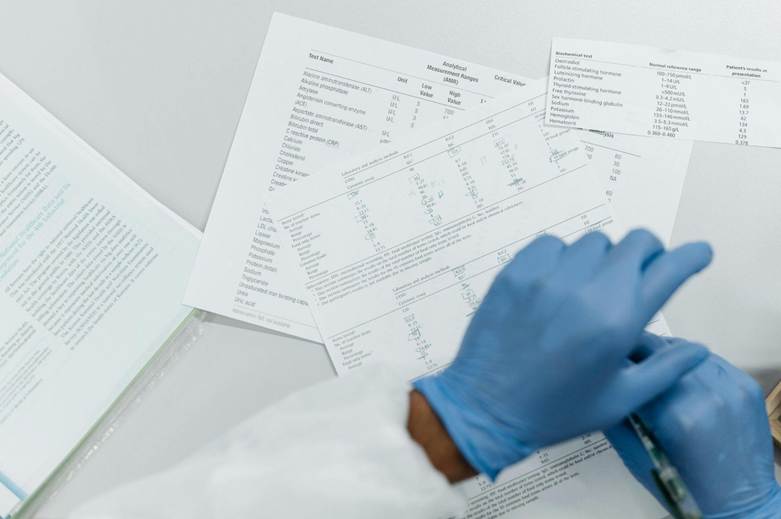
When your OEM compliance documents are incomplete or missing, it impacts everything.
Case 1: Complete documents, customs hold anyway
A UK buyer imported 12,000 units of whitening mouthwash with full documentation: batch-specific CoA, SDS, CPNP, and batch records. Customs held the container for 11 days.
The problem? CoA listed hydrogen peroxide at 0.09%. SDS used a UN number for products containing 0.1%+ peroxide. Customs flagged the mismatch and demanded port lab re-testing. Cost: Approx. $4,500 storage, $2,000 lab work, two-week delay.
The lesson: Documents must align. One decimal mismatch triggers review.
Case 2: Documents present, batch untraceable
A Dubai hotel supplier ordered 50,000 sachet mouthwash units with Halal certification and batch records. Six months later, guest complaints of “chemical aftertaste” surfaced. The buyer requested batch traceability.
The batch record listed lot numbers for mint flavor and glycerin, but they didn’t match the OEM’s supplier CoAs. The OEM admitted substituting glycerin mid-production to avoid delays but didn’t update the batch sheet. The buyer couldn’t trace the source and lost a $43,000 annual contract.
The lesson: Batch records only work if raw material lot numbers cross-reference to supplier CoAs. Without supplier certificates matching the batch sheet, you have traceability theater, not traceability.
Use this table to verify you have all the required cosmetic importer requirements:
| Document | Required for Import | Batch-Specific | Buyer Must Hold Copy | Risk If Missing |
| Certificate of Analysis (CoA) | Yes (most markets) | Yes | Yes | Customs hold, retailer rejection |
| Safety Data Sheet (SDS) | Yes (if hazardous ingredients) | No | Yes | Shipment delay, freight reclassification |
| Batch Manufacturing Record | Sometimes (retailer-dependent) | Yes | Yes | No traceability in recalls |
| CPNP Registration | Yes (EU only) | No | Yes (access to PIF) | EU customs refusal, Amazon suspension |
| GCC Halal Certificate | Yes (Middle East) | Depends on cert scope | Yes | Market access blocked, hotel/airline rejection |
Download Importer Dossier Checklist (PDF)
Not every buyer needs every document with the same urgency. Your channel and market determine your priorities.
Priorities:
Amazon’s compliance standards are stricter than most retail channels. They require documentation upfront and suspend listings quickly if anything’s missing.
Priorities:
Hospitality buyers focus on regulatory compliance (Halal) and operational risk (leakage). Their contracts often include penalty clauses for non-compliance.
The core documents stay the same, but the emphasis shifts based on your buyer risk profile.
The quality of your OEM shows up in how they manage OEM compliance documents. Here’s how to tell the difference:
| Factor | Strong OEM | Weak OEM |
| Document access timing | Before shipment | “On request” after payment |
| Naming conventions | Batch numbers match invoices | Generic file names like “CoA_Final.” |
| Batch linkage | Every doc references same batch number | Inconsistent or missing batch IDs |
| Audit readiness | Organized digital folders | Sent as loose PDFs via email |
| Update frequency | SDS and CoA are updated quarterly | Years-old documents with outdated info |
Strong OEMs treat documentation as part of the product. Weak OEMs treat it as an afterthought. Request OEM Compliance File Example.
Most OEMs include basic documentation (CoA, SDS, batch records) in the product cost. Specialized certifications like CPNP or Halal may incur additional fees ($500–$2,000 per SKU).
CoA and Batch Records are batch-specific and must be updated for every production run. SDS, CPNP, and Halal certificates are typically valid across multiple batches unless the formulation changes.
CoAs are valid for the specific batch they reference. SDS documents are typically valid for 3–5 years unless formulation or regulatory requirements change.
You have three options: provide the missing documentation (if possible), re-export the shipment (at your cost), or abandon the shipment (total loss). Re-export costs $2,000–$5,000+, depending on container size.
No. CPNP is EU-specific. However, the UK now has a separate system (SCPN) post-Brexit, and other markets have their own registration portals.
Yes. Packaging format doesn’t exempt you from documentation requirements. Sachet products still need CoA, SDS (if applicable), and batch records.
Not recommended. If customs requests documentation and you can’t provide it immediately, your shipment will be held. Don’t ship until you have all documents in hand.
Incomplete documentation is the most preventable cause of import failures. The cost of requesting documents upfront is zero. The cost of not having them when customs calls is thousands of dollars and weeks of delays.
Before you approve shipment, confirm:
Your dossier either clears customs or costs you money.
Ready to validate your compliance before shipment?
Don’t ship blind. Ship confident.
Schedule a consultation to discuss your industry needs, volume requirements, and custom formulation options.
Trusted by 200+ brands across hospitality, retail, and travel sectors