In This Article
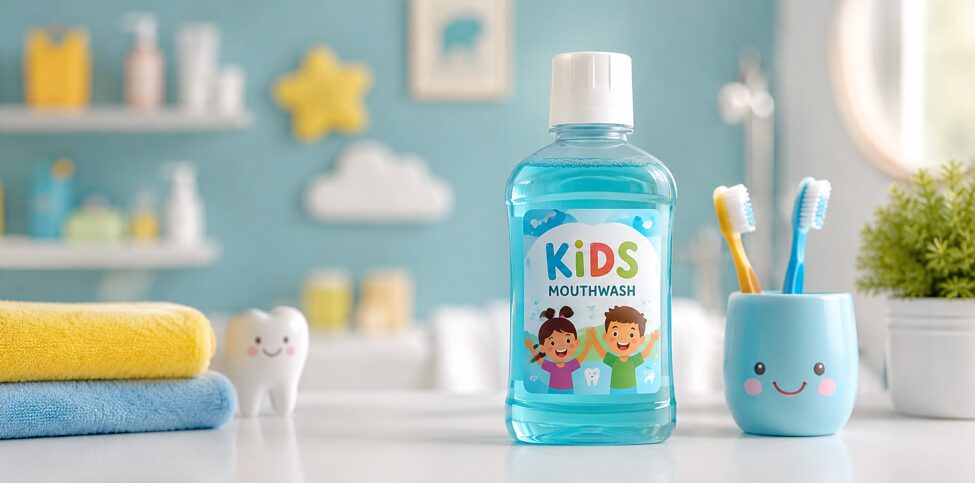
One of the first questions a manufacturer asks during a kids mouthwash project is who the product is being developed for. While the answer is naturally “children,” that alone is not enough to guide product development. Manufacturers also need to understand the intended age group, target market, product objectives, and the type of experience the finished product is expected to deliver.
The intended age group, target market, product claims, formulation direction, flavour profile, and packaging all influence how the product is developed. Defining these requirements early gives the manufacturer a clearer framework for evaluating feasibility before formulation and sample development begin.
This guide walks through the key OEM decisions involved in kids mouthwash development, helping you prepare a stronger project brief before contacting a manufacturer.
A common assumption is that a kids mouthwash is simply an adult formula with a milder flavour. In practice, the intended user influences almost every development decision, including formulation direction, sensory experience, packaging, product claims, and overall market positioning. This is why defining the target user is one of the first steps in OEM development.
Rather than adapting an existing adult product, manufacturers develop kids mouthwash around the needs of the intended user from the very beginning.
Before recommending a formulation direction, a kids mouthwash manufacturer needs to understand who the product is being developed for, where it will be sold, and what the finished product is expected to deliver.
It is also important to understand that “kids” is not a single product category. Manufacturers often need to define the intended age group early because it influences the formulation direction, flavour profile, packaging approach, and the overall product experience.
Rather than treating every children’s product the same, development begins with a clear understanding of the intended user.
Once that foundation is established, manufacturers evaluate the project as one complete product system. The intended age group, target market, formulation, flavour, packaging, and product claims all influence one another throughout development rather than being decided independently.
Changing the intended user later in the project often means revisiting several decisions. For example, adjusting the target age group may require changes to the flavour profile, packaging design, product claims, or formulation direction before development can continue.
Defining these objectives early helps manufacturers recommend the most suitable development path and keeps the project moving efficiently.
Once the intended age group has been established, the next step is defining where the product will be sold and what you want it to communicate. Manufacturers use this information to recommend a formulation direction that supports both your commercial objectives and the expectations of your target market.
For example, a children’s mouthwash developed for one market may require a different approach from a similar product intended for another. Likewise, the claims you plan to make influence how the product is developed, from formulation and flavour to packaging and supporting documentation.
These decisions are much easier to incorporate at the beginning of the project than after development is already underway.
Before requesting samples from a children mouthwash OEM, it helps to confirm:
Providing this information early gives the manufacturer a clearer basis for evaluating feasibility and preparing a development plan. Changing the target market or product claims after formulation has begun may require revisions to the formulation, packaging, or supporting documentation, which can extend the overall project.
If your product will be sold in the United States, understanding how FDA registration for mouthwash brands may apply before development begins can also help avoid unnecessary revisions later.
Once the target age group, market, and product claims have been defined, the next step is deciding on the formulation direction. This is where manufacturers evaluate your product objectives, ingredient preferences, sensory expectations, and commercial feasibility as one development brief rather than as separate requests.
For example, you may want an alcohol-free formula, a milder flavour, or certain ingredient restrictions. Each of these is a reasonable product requirement, but the manufacturer evaluates how they work together before recommending an existing formulation or developing a custom one.
The goal is to create a product that supports your intended positioning while remaining suitable for commercial production.
Rather than removing or reducing individual ingredients one at a time, manufacturers develop the formulation around the complete product brief. This helps ensure the finished product delivers the experience you want without creating unnecessary formulation challenges later in development.
Before prototype development begins, it helps to decide:
Defining these requirements early gives the manufacturer a clearer basis for recommending the most suitable development pathway. If your project involves additional formulation requirements or ingredient restrictions, deciding between a stock and custom mouthwash formula before sample development can also help reduce unnecessary revisions and keep the project moving efficiently.
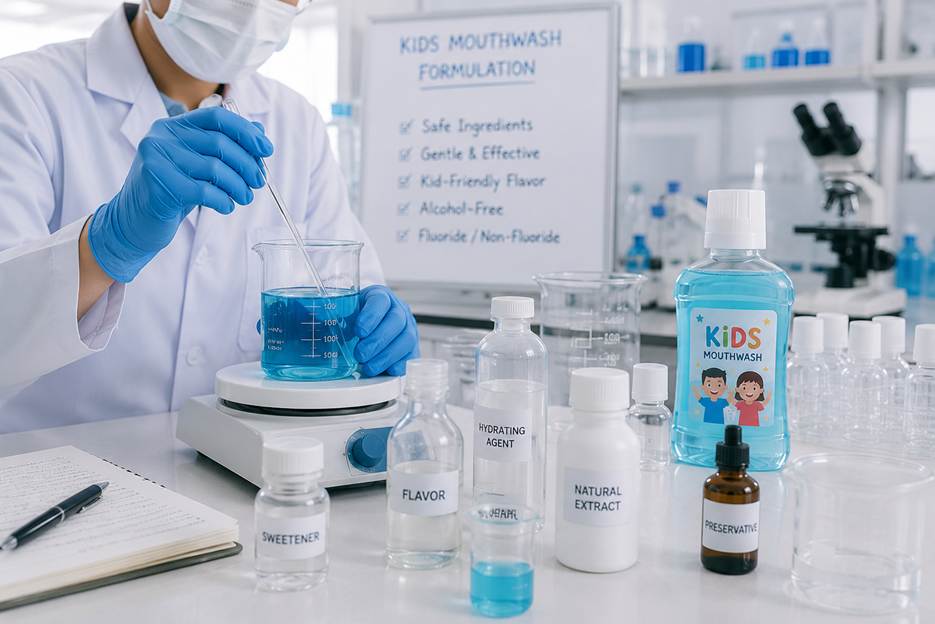
Flavour development is more than choosing a taste that children will enjoy. From an OEM perspective, flavour is developed alongside the formulation because it influences the overall product experience and needs to work within the product’s intended positioning.
Sensory acceptance plays an especially important role in children’s oral care products because the user experience directly influences whether the product will be used consistently. While adult consumers may prioritize specific product benefits, children are more likely to respond to taste, mouthfeel, and overall comfort during use.
For this reason, sensory development is not simply about choosing an appealing flavour. It is an important part of creating a product that supports regular use and aligns with your brand positioning.
Manufacturers evaluate several sensory elements together, including:
These decisions are not made independently. A flavour profile that suits one intended age group or product positioning may not be the best choice for another. The manufacturer therefore balances flavour acceptance with formulation stability, product consistency, and the commercial objectives defined earlier in the project.
For example, you may decide that a fruit flavour better suits your target market than a traditional mint profile. Before making that change, the manufacturer will also consider whether the new flavour still delivers the product experience you want, fits the intended positioning, and can be produced consistently at commercial scale.
This is why it helps to define your preferred sensory profile before sample development begins. Changing the flavour direction after prototypes have already been prepared often means adjusting the formulation and producing additional sample rounds before the product is ready for approval.
Packaging should do more than hold the finished product. It needs to support the intended user while remaining practical for commercial production. That is why manufacturers evaluate packaging alongside the formulation instead of treating it as a separate decision made after samples have been approved.
When reviewing packaging, manufacturers typically consider:
These elements are evaluated together because each one can influence the others. For example, changing to a smaller bottle may also require a different closure, affect the available label space, and mean revising the artwork before production can begin.
Rather than evaluating these decisions separately, it is helpful to consider bottle size, closure style, artwork layout, and production requirements as parts of the same packaging system.
A change to one element may affect the others, influencing everything from label design and filling operations to production planning. Reviewing the complete packaging system together helps support a smoother development process and reduces the need for avoidable revisions later.
This is why your packaging direction should be confirmed before the final sample is approved. Late changes can affect artwork approval, packaging procurement, production scheduling, and the overall project timeline, even when the formulation itself is already finalized.
Choosing an appropriate mouthwash packaging format early also gives manufacturers a clearer basis for planning production and moving the project into commercial manufacturing.
Receiving a sample is your opportunity to confirm that the product still reflects the brief you agreed on with the manufacturer. Rather than deciding based on flavour alone, review the sample as a complete product and consider whether it is ready to move closer to commercial production.
When evaluating a sample, ask yourself:
Try the sample more than once before making a decision. A flavour that seems appealing at first may become too strong with repeated use, while a milder formulation may better suit the product experience you originally planned. Reviewing the sample over several days also gives you time to assess the overall user experience instead of reacting to a single first impression.
For example, you may find that a fruit flavour and bright packaging create a fun, engaging product. However, if the finished sample no longer reflects the age group or product positioning you originally planned, it is worth discussing adjustments with the manufacturer before approving it.
The first prototype might not always be the final production version. Sample evaluation is intended to identify refinements before commercial production begins, and it is fine to go through one or more revision rounds before the formulation, flavour, and packaging are approved together.
Sample evaluation is also a good opportunity to identify any remaining questions before artwork approval, packaging procurement, and commercial production planning begin. Resolving these points early usually helps reduce unnecessary revisions later in the project.
Taking the time to review the complete product brief rather than focusing on one feature helps reduce unnecessary changes later in development and supports a smoother mouthwash development timeline.
The first conversation with a manufacturer is usually more productive when you can clearly explain the product you want to develop. You do not need every technical detail worked out, but having the main project decisions prepared allows the discussion to focus on refining your idea rather than trying to define it from scratch.
Before requesting samples or quotations, be ready to discuss:
You do not have to arrive with all the answers. If some decisions are still open, let the manufacturer know which areas you would like guidance on. For instance, you may already know the target market and flavour profile but still be deciding on the packaging direction or whether an existing formulation can support your project.
Preparing this information in advance helps the manufacturer understand your objectives, identify potential development considerations, and recommend the most practical route into formulation and sample development.
Before requesting samples, it is also worth evaluating the manufacturer’s experience with private label oral care products. Choosing a manufacturer with relevant OEM expertise can make it easier to navigate formulation decisions, packaging development, and sample refinement throughout the project.
From an OEM perspective, kids mouthwash is developed around the intended age group rather than by modifying an adult formula. The target user influences formulation, flavour, packaging, product claims, and the overall development pathway.
Manufacturers start with your product objectives. The intended age group, target market, ingredient preferences, flavour expectations, and commercial goals all help determine whether an existing formulation or a custom development route is the better fit.
The intended age group guides many of the decisions made throughout development, including formulation direction, flavour profile, packaging, and product claims. Changing the target user later may require revisions across several parts of the project.
Flavour is evaluated as part of the overall product experience rather than on taste alone. During sample review, consider whether the flavour, sweetness, and mouthfeel match your intended users and the product positioning you want your brand to deliver.
Prepare the key details that define your project, including the intended age group, target market, formulation direction, flavour preferences, packaging direction, estimated order quantity, and expected launch timeline. A clear project brief allows the manufacturer to evaluate feasibility and prepare more accurate samples.
The timeline depends on factors such as formulation requirements, sample revisions, packaging approval, and production planning. Projects that begin with a clear product brief and fewer changes during development generally move into commercial production more efficiently.
Every successful kids mouthwash project begins with a clear product brief. When the intended age group, product objectives, flavour profile, packaging direction, and commercial goals are defined early, manufacturers can evaluate the project more efficiently and identify potential challenges before sample development begins.
At ORALABX, we work with brands to turn those early ideas into commercially viable products. From formulation planning and flavour development to packaging evaluation and sample refinement, we help you make informed decisions at every stage of the OEM process.
Talk to our kids private label mouthwash manufacturer team about your project, and we’ll help you evaluate the most practical development path before formulation, sampling, and commercial production begin.

Share your product type, target market, estimated volume and launch timeline. We will review the project scope and recommend the appropriate development path.
Best suited to brands, importers and distributors planning scalable commercial production.